
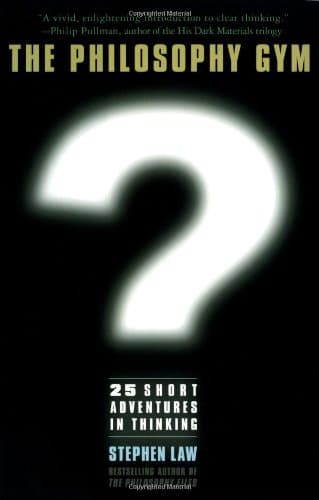
The Philosophy Gym: 25 Short Adventures in Thinking
صالة الألعاب الفلسفية: 25 مغامرة قصيرة في التفكير
Le Gymnase de la philosophie : 25 courtes aventures dans la pensée
Editorial summary
Stephen Law's The Philosophy Gym: 25 Short Adventures in Thinking offers an accessible introduction to philosophical reasoning through twenty-five self-contained chapters addressing fundamental questions. While covering diverse topics from time travel to moral relativism, several chapters directly engage questions about God's existence and religious belief, making the work relevant to contemporary debates in philosophy of religion.
Law structures his exploration of theistic questions through dialectical exercises that present opposing viewpoints before subjecting them to critical analysis. In chapters addressing the existence of God, the problem of evil, and the rationality of religious belief, he employs a conversational style that masks sophisticated philosophical argumentation. His treatment of the cosmological argument, for instance, presents the traditional formulation before systematically examining its logical vulnerabilities, particularly the special pleading involved in exempting God from the requirement for explanation that the argument itself establishes.
The work's most substantial contribution to the God debate appears in its treatment of the problem of evil, where Law develops what would later become his "evil god challenge." He argues that the standard theodicies used to reconcile God's goodness with worldly suffering could equally support belief in an omnipotent, omniscient, but maximally evil deity. This symmetry argument challenges theists to explain why evidence they cite for a good God does not equally support its malevolent counterpart. Law's approach exemplifies his broader methodological commitment to exposing inconsistencies in religious reasoning through parallel case analysis.
Throughout these discussions, Law positions himself against both naive religious faith and dogmatic atheism, though his sympathies clearly lie with skeptical inquiry. He particularly targets fideistic approaches that shield religious beliefs from rational scrutiny, arguing that faith-based epistemologies special plead for religion in ways that would be rejected in any other domain of knowledge. His pedagogical method emphasizes developing critical thinking skills that readers can apply independently to evaluate religious claims.
The work contributes to public philosophy of religion by demonstrating how rigorous philosophical analysis can be presented without technical jargon. Law's treatment suggests that careful reasoning about God need not require professional philosophical training, thereby democratizing access to these debates while maintaining argumentative standards that engage with contemporary academic discussions in philosophy of religion.
Argument formulations engaged
Related works
Law, Stephen (2003). The Philosophy Gym: 25 Short Adventures in Thinking. Thomas Dunne Books.
@book{the-philosophy-gym-25-short-adventures-i,
  author    = {Law, Stephen},
  title     = {The Philosophy Gym: 25 Short Adventures in Thinking},
  year      = {2003},
  publisher = {Thomas Dunne Books},
  url       = {https://god-database.com/en/works/the-philosophy-gym-25-short-adventures-in-thinking-2003}
}