
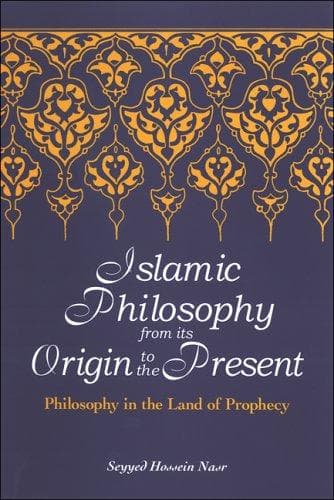
Islamic Philosophy from its Origin to the Present.. Philosophy in the Land of Prophecy
الفلسفة الإسلامية من نشأتها حتى الحاضر.. الفلسفة في أرض النبوة
La philosophie islamique de ses origines à nos jours.. La philosophie dans la terre de la prophétie
Islamic philosophy constitutes a living intellectual tradition rooted in prophetic revelation, whose continuity and inner coherence cannot be understood apart from the spiritual and metaphysical soil of the land of prophecy.
Editorial summary
Seyyed Hossein Nasr's Islamic Philosophy from its Origin to the Present: Philosophy in the Land of Prophecy presents a comprehensive intellectual history of Islamic philosophical thought from its inception through contemporary developments. The work examines how Islamic philosophy has consistently engaged with questions of divine reality, prophecy, and the relationship between revelation and reason across fourteen centuries of intellectual tradition.
Nasr traces the emergence of Islamic philosophy through its formative encounters with Greek philosophical texts, particularly those of Aristotle and Plato, while emphasizing how Muslim philosophers transformed rather than merely transmitted these ideas. The work demonstrates how figures like al-Farabi, Ibn Sina (Avicenna), and Ibn Rushd (Averroes) developed sophisticated philosophical systems that integrated Quranic revelation with rational inquiry. Central to Nasr's analysis is the concept of prophecy as a philosophical problem, examining how Islamic thinkers theorized the prophet as the perfect philosopher who receives divine knowledge through intellectual intuition rather than discursive reasoning alone.
The monograph pays particular attention to the distinction between falsafa (philosophy proper) and kalam (dialectical theology), showing how both traditions addressed questions about God's existence, attributes, and relationship to creation. Nasr explores how Islamic philosophers developed unique arguments for God's existence that differed from Western scholastic proofs, particularly through the concept of wajib al-wujud (necessary existence) as elaborated by Ibn Sina. The work also examines the illuminationist philosophy of Suhrawardi and the transcendent philosophy of Mulla Sadra, demonstrating how later Islamic thought synthesized rational philosophy with mystical experience.
Nasr's intellectual-historical approach situates Islamic philosophy within its broader cultural and religious context, arguing that prophecy remains the central axis around which Islamic philosophical discourse revolves. The work challenges Western narratives that present Islamic philosophy as ending with Ibn Rushd, instead tracing vibrant philosophical traditions through the Ottoman, Safavid, and Mughal periods into the present. By examining how contemporary Muslim philosophers engage with both traditional Islamic sources and modern Western thought, Nasr demonstrates the continued relevance of prophetic philosophy for addressing perennial questions about divine reality, human knowledge, and the purpose of existence within Islamic intellectual discourse.
Structured analysis
Structure of the work
Argument formulations engaged
Nasr, Seyyed Hossein (2006). Islamic Philosophy from its Origin to the Present.. Philosophy in the Land of Prophecy.
@book{islamic-philosophy-from-its-origin-to-th,
  author    = {Nasr, Seyyed Hossein},
  title     = {Islamic Philosophy from its Origin to the Present.. Philosophy in the Land of Prophecy},
  year      = {2006},
  url       = {https://god-database.com/en/works/islamic-philosophy-from-its-origin-to-the-present-philosophy-in-the-land-of-prophecy}
}