
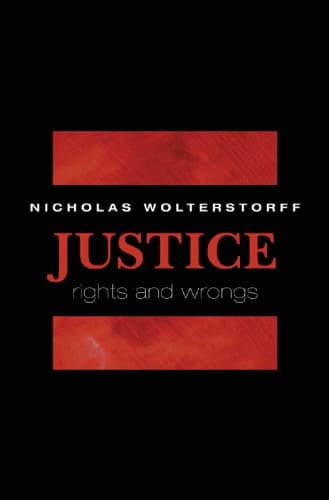
Justice: Rights and Wrongs
العدالة: الحقوق والأخطاء
Justice : Droits et torts
Editorial summary
This monograph presents a comprehensive theory of justice grounded in the concept of inherent human rights, which Wolterstorff ultimately traces to a theistic foundation. The work challenges dominant philosophical traditions, particularly those deriving from eudaimonism and consequentialism, which the author argues cannot adequately account for the moral significance of individual persons and their rights.
Wolterstorff develops what he terms a "social practice" approach to rights, analyzing how rights function within human relationships and institutional contexts. He contends that justice consists fundamentally in respecting rights—both natural and socially conferred—rather than in maximizing aggregate welfare or cultivating virtue. This framework directly opposes influential theories from both utilitarian and neo-Aristotelian camps, including explicit critiques of MacIntyre's virtue ethics and various forms of consequentialist reasoning.
The theological dimensions emerge progressively throughout the work. While much of the argument proceeds through philosophical analysis accessible to secular readers, Wolterstorff ultimately grounds inherent human rights in the biblical conception of humans bearing God's image. He argues that secular attempts to establish inherent human dignity—whether through capacities-based approaches or Kantian rationality—fail to protect the most vulnerable members of society, including infants and those with severe cognitive disabilities. Only the theistic account, he maintains, provides universal coverage and adequate grounding for human worth.
The work engages extensively with historical sources, tracing rights discourse from Hebrew and Christian scriptures through canon lawyers, Protestant reformers, and Enlightenment theorists. Wolterstorff challenges standard narratives that locate rights language primarily in secular modernity, demonstrating instead its deep roots in biblical and theological traditions. He particularly emphasizes how the biblical concern for widows, orphans, and strangers exemplifies a rights-based approach to justice.
Wolterstorff's methodological approach combines analytical philosophy with historical scholarship and theological reflection. He employs careful conceptual analysis while remaining attentive to the practical implications of competing theories. The work represents a significant intervention in contemporary debates about justice, human rights, and political philosophy, offering a robustly theistic alternative to both secular liberal theories and communitarian critiques. His argument that adequate grounding for human rights requires theistic commitments challenges widespread assumptions about the relationship between religious belief and public discourse about justice.
Argument formulations engaged
Wolterstorff, Nicholas (2008). Justice: Rights and Wrongs.
@book{justice-rights-and-wrongs-2008,
  author    = {Wolterstorff, Nicholas},
  title     = {Justice: Rights and Wrongs},
  year      = {2008},
  url       = {https://god-database.com/en/works/justice-rights-and-wrongs-2008}
}