
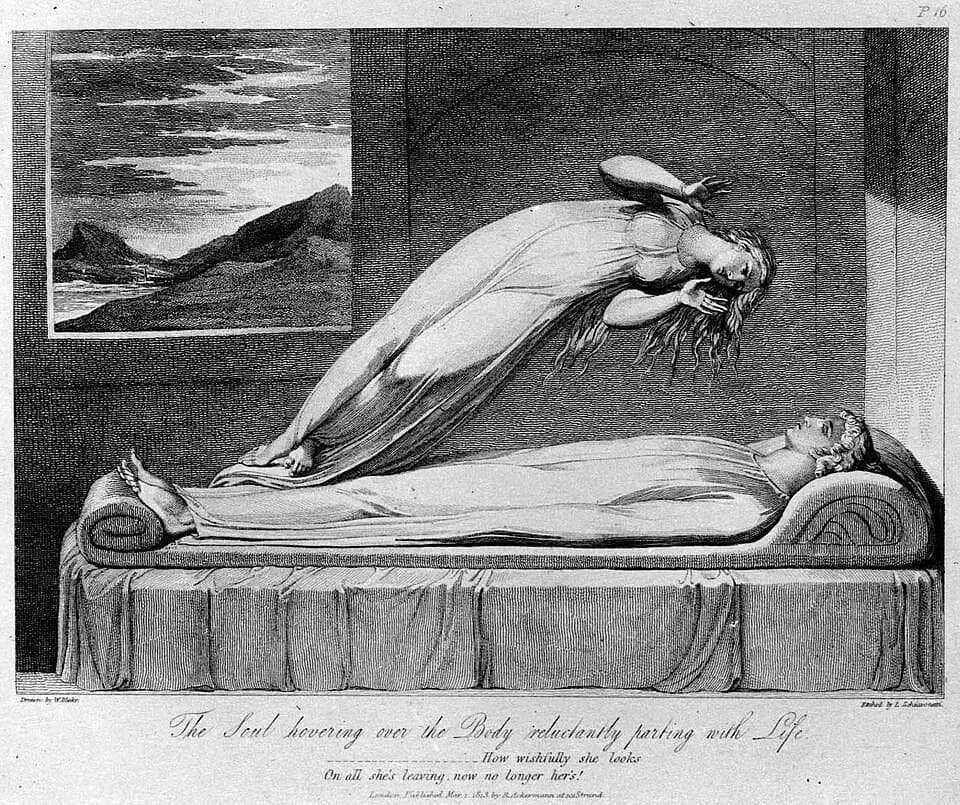
Of the Immortality of the Soul
في خلود الروح
De l'Immortalité de l'Âme
Editorial summary
David Hume's posthumously published essay "Of the Immortality of the Soul" (1777) presents a systematic philosophical critique of traditional arguments for the soul's survival after death. Written during the Scottish Enlightenment but withheld from publication during his lifetime due to its controversial nature, the essay exemplifies Hume's empiricist methodology applied to theological questions, challenging both metaphysical and moral justifications for immortality.
The work proceeds through three distinct lines of argumentation. First, Hume examines metaphysical arguments, contending that no observable evidence supports the soul's independence from the body. Drawing on his empiricist principles, he argues that all mental phenomena correlate with physical states, suggesting that consciousness depends entirely on bodily functions. This directly challenges Cartesian dualism and scholastic notions of substantial souls. Second, he addresses moral arguments that posit immortality as necessary for divine justice. Hume counters that earthly life provides insufficient evidence for such cosmic moral requirements, and that the apparent disproportion between finite human actions and infinite rewards or punishments renders the doctrine morally problematic rather than supportive.
Third, and perhaps most provocatively, Hume examines what he terms physical analogies from nature. He observes that nothing in the natural world suggests permanence or immortality; rather, all of nature displays cycles of generation and corruption. The essay argues that believing in human immortality while observing universal mortality in nature requires special pleading unsupported by empirical evidence.
Hume's critique targets not only Christian orthodoxy but also deist philosophers who maintained belief in immortality on purely rational grounds. His argument anticipates later naturalistic approaches to consciousness while challenging the period's common assumption that morality requires belief in an afterlife. The essay's significance lies in its application of rigorous empirical skepticism to a doctrine considered fundamental to both religious belief and moral order in eighteenth-century thought.
The work's influence extends beyond philosophy of religion into moral philosophy and psychology. By severing the presumed connection between morality and immortality, Hume opens space for secular ethics. His naturalistic approach to consciousness prefigures later debates about mind-body relationships. Though brief, the essay represents a crucial intervention in Enlightenment debates about reason, religion, and human nature, demonstrating how empiricist methodology could challenge even the most cherished religious doctrines.
Argument formulations engaged
Related works
Hume, David (1777). Of the Immortality of the Soul.
@book{of-the-immortality-of-the-soul-1777,
  author    = {Hume, David},
  title     = {Of the Immortality of the Soul},
  year      = {1777},
  url       = {https://god-database.com/en/works/of-the-immortality-of-the-soul-1777}
}