
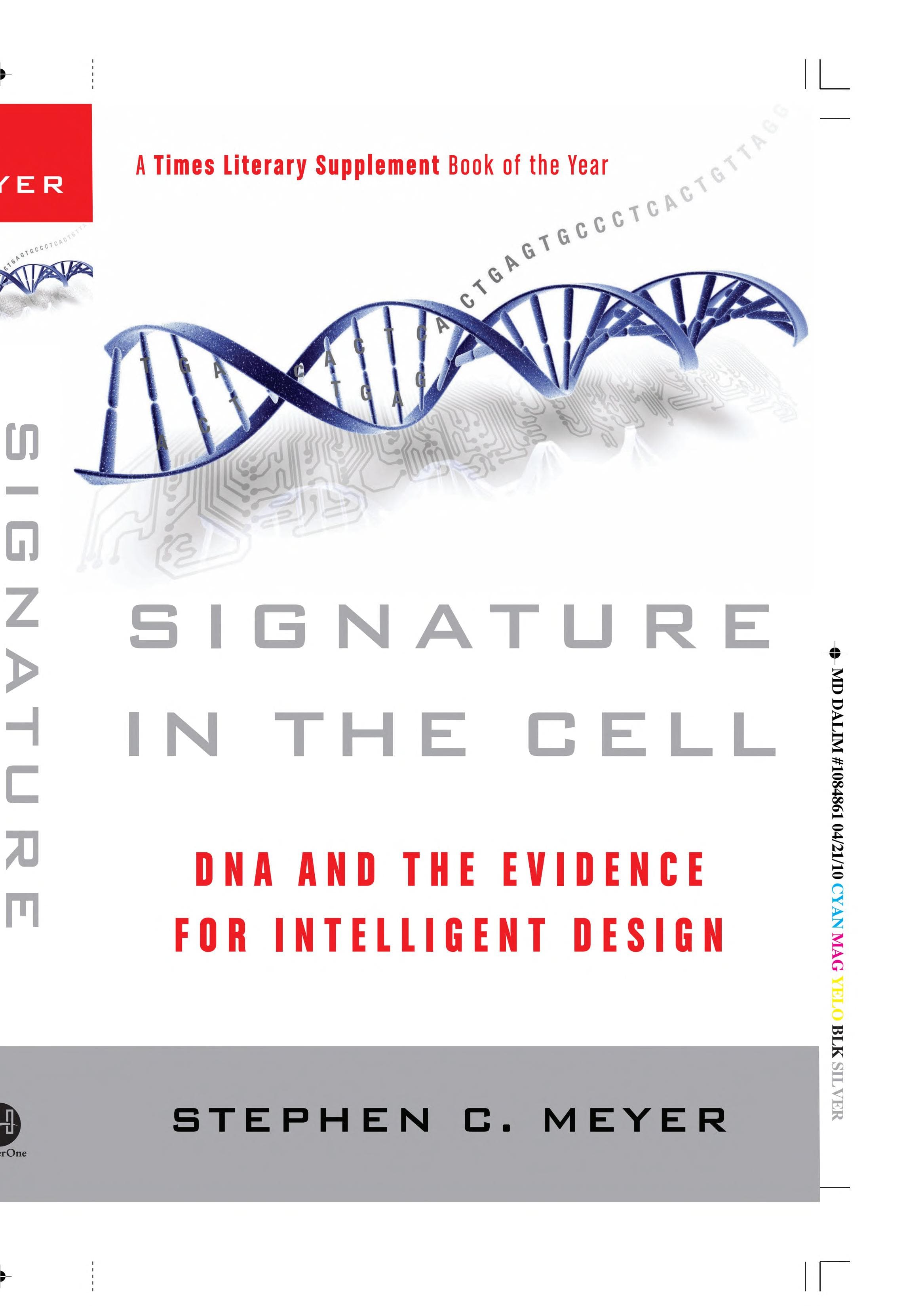
La Signature dans la cellule
البصمة في الخلية
The digitally specified information in DNA is best explained by intelligent agency rather than by unguided physical processes alone.
Editorial summary
Meyer's "Signature in the Cell" presents a sophisticated iteration of the design argument for theistic belief, focusing specifically on the information content of DNA and the origin of biological information. The work represents a significant contribution to the intelligent design movement, offering what Meyer considers a scientific case for an intelligent cause behind the origin of life. His central thesis contends that the complex specified information found in DNA points decisively toward an intelligent designer rather than undirected natural processes.
The monograph engages extensively with contemporary origin-of-life research, examining various naturalistic hypotheses for the emergence of the first living cells. Meyer systematically critiques chance-based theories, necessity-based theories, and combination theories, arguing that each fails to account adequately for the information-rich structures found in even the simplest living organisms. His analysis draws heavily on information theory and probability calculations to demonstrate what he views as the insurmountable improbability of life arising through purely materialistic processes.
Meyer's methodological approach combines scientific argumentation with philosophical analysis, positioning intelligent design as the best explanation for biological information based on our uniform experience of how information arises. He employs an inference to the best explanation, arguing that since we observe intelligence producing information in our present experience, we can legitimately infer an intelligent cause for the information in DNA. This reasoning follows what Meyer terms the "uniformitarian method" borrowed from historical sciences like geology and paleontology.
The work situates itself within the broader intelligent design movement while maintaining distance from young-earth creationism. Meyer engages critically with prominent naturalistic scientists and philosophers, including Richard Dawkins, Francis Crick, and Stuart Kauffman, challenging their explanations for life's origin. His argument represents a modern sophistication of William Paley's watchmaker analogy, updated with contemporary molecular biology and information science.
"Signature in the Cell" matters to the God debate by offering what proponents view as empirical support for theistic belief grounded in biological evidence. Critics counter that Meyer's approach represents a god-of-the-gaps argument that inappropriately inserts supernatural causation into scientific inquiry. The work exemplifies how design arguments continue to evolve in response to scientific discoveries, particularly in molecular biology, while remaining controversial within mainstream scientific discourse.
Structured analysis
Argument formulations engaged
Related works
Meyer, Stephen C. (1994). Signature in the Cell. HarperOne.
@book{signature-in-the-cell-dna-and-the-eviden,
  author    = {Meyer, Stephen C.},
  title     = {Signature in the Cell},
  year      = {1994},
  publisher = {HarperOne},
  url       = {https://god-database.com/en/works/signature-in-the-cell-dna-and-the-evidence-for-intelligent-design}
}