
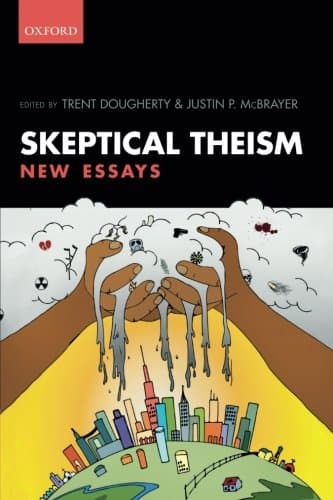
Skeptical Theism: New Essays
الشك اللاهوتي: مقالات جديدة
Théisme sceptique : nouveaux essais
Editorial summary
This edited volume examines skeptical theism, a philosophical position that has emerged as a significant response to evidential arguments from evil against God's existence. Michael Bergmann and his contributors explore how skeptical theism addresses the problem of evil by questioning human epistemic limitations regarding divine purposes and the nature of good and evil.
The volume's central thesis maintains that humans lack sufficient cognitive access to determine whether apparently gratuitous evils serve greater divine purposes. Skeptical theists argue that given the vast epistemic distance between finite human minds and an infinite divine mind, one cannot reasonably infer from the existence of seemingly pointless suffering that God lacks morally sufficient reasons for permitting such evils. This approach challenges evidential arguments from evil, particularly those advanced by William Rowe and others who claim that the existence of apparently gratuitous evil provides strong evidence against theism.
The contributors examine various aspects and implications of skeptical theism through rigorous philosophical analysis. Key discussions include the scope of human cognitive limitations, whether skeptical theism leads to problematic forms of moral skepticism, and how this position relates to traditional theodicies. Several essays address the "skeptical theist's dilemma" - the worry that if humans cannot discern God's reasons for permitting evil, they may equally lack grounds for moral judgment in everyday contexts.
The volume engages critically with objections from philosophers like Bruce Russell, Paul Draper, and Richard Swinburne, who argue that skeptical theism either proves too much or fails to adequately address the evidential force of evil. Contributors defend skeptical theism against charges that it undermines moral knowledge, religious practice, or rational belief formation. They distinguish between skepticism about God's specific reasons for permitting particular evils and skepticism about moral knowledge more generally.
This collection advances the God debate by providing sophisticated defenses of theistic belief against one of its most formidable challenges. The essays demonstrate how considerations of human epistemic limitations can deflect evidential arguments from evil without abandoning rational discourse about God. By focusing on what humans can and cannot reasonably claim to know about divine purposes, the volume offers a philosophically robust strategy for maintaining theistic belief in the face of evil's existence.
Argument formulations engaged
Related works
Bergmann, Michael (2014). Skeptical Theism: New Essays. Oxford University Press.
@book{skeptical-theism-new-essays-2014,
  author    = {Bergmann, Michael},
  title     = {Skeptical Theism: New Essays},
  year      = {2014},
  publisher = {Oxford University Press},
  url       = {https://god-database.com/en/works/skeptical-theism-new-essays-2014}
}