
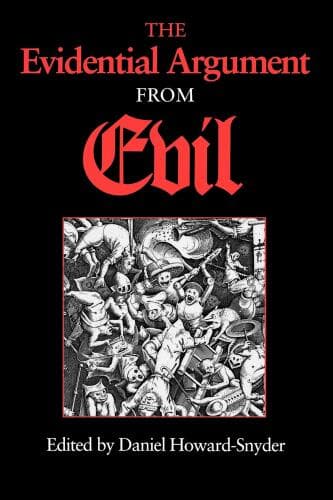
The Evidential Argument from Evil
الحجة الاستدلالية من الشر
L'Argument probatoire à partir du mal
The existence of gratuitous evil in the world constitutes strong evidential — not merely logical — grounds for disbelief in an omnipotent, omniscient, and perfectly good God.
Editorial summary
William Rowe's edited volume "The Evidential Argument from Evil" represents a pivotal contribution to contemporary philosophical discourse on the problem of evil, advancing beyond traditional logical formulations to establish a probabilistic challenge to theistic belief. Unlike the logical problem of evil, which seeks to demonstrate a strict incompatibility between God's existence and evil's reality, Rowe develops an evidential approach arguing that the character and distribution of evil in the world render God's existence improbable, though not impossible.
The volume systematically examines how specific instances of seemingly gratuitous suffering—evil that appears to serve no greater good or prevent no greater evil—constitute evidence against the hypothesis of an omnipotent, omniscient, and wholly good deity. Rowe's approach employs rigorous analytic methodology, carefully distinguishing between deductive certainty and inductive probability while maintaining that rational belief must be proportioned to evidence. The work engages directly with theodicies and defenses offered by theistic philosophers, particularly those invoking free will, soul-making, or appeals to divine hiddenness and human cognitive limitations.
Central to Rowe's argument is the principle that if genuinely pointless evil exists, then God does not exist. He examines paradigm cases of intense suffering, both human and animal, that resist explanation within traditional theodical frameworks. The volume addresses sophisticated theistic responses, including skeptical theism's claim that human beings cannot reasonably assess whether apparently gratuitous evils serve hidden divine purposes. Rowe counters that while absolute certainty about evil's pointlessness remains elusive, the evidential weight of apparently gratuitous suffering justifies probabilistic judgments against theism.
The work's significance extends beyond its specific arguments to its methodological innovations in philosophy of religion. By shifting focus from logical compatibility to evidential assessment, Rowe opens new avenues for both critique and defense of theistic belief. His framework has generated extensive philosophical engagement, prompting refined formulations of both skeptical theist responses and alternative evidential arguments. The volume demonstrates how analytic philosophy can address perennial theological questions through careful attention to probability, evidence, and the limits of human knowledge, establishing the evidential argument from evil as a central challenge in contemporary philosophy of religion that theistic thinkers must address rather than merely dismiss.
Structured analysis
Argument formulations engaged
Related works
Rowe, William The Evidential Argument from Evil. Indiana University Press.
@book{the-evidential-argument-from-evil,
  author    = {Rowe, William},
  title     = {The Evidential Argument from Evil},
  year      = {n.d.},
  publisher = {Indiana University Press},
  url       = {https://god-database.com/en/works/the-evidential-argument-from-evil}
}