
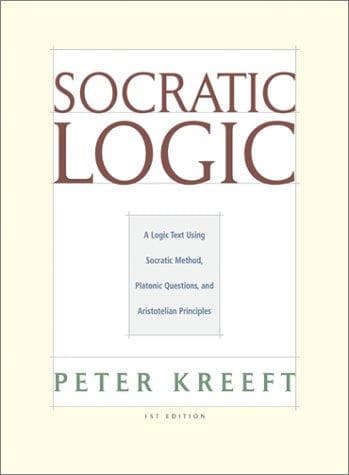
Socratic Logic
المنطق السقراطي
Logique socratique
Editorial summary
This comprehensive logic textbook represents Kreeft's attempt to resurrect classical Aristotelian logic for contemporary students, positioning it as a superior alternative to modern symbolic logic for philosophical and theological reasoning. The work systematically presents traditional term logic, syllogistic reasoning, and the classical categories of thought, arguing that this approach better serves students seeking to engage with perennial philosophical questions, including those concerning God's existence and nature.
Kreeft structures the text as both a practical manual and a philosophical argument. He contends that modern symbolic logic, while valuable for mathematics and computer science, fails to address the substantive questions that matter most to human beings. Classical logic, he maintains, developed within a realist metaphysical framework that acknowledges objective truth and the correspondence between thought and reality. This framework proves essential for theological discourse, where questions about God's attributes, divine simplicity, and the relationship between faith and reason require precise conceptual analysis.
The work explicitly connects logical training to natural theology. Kreeft demonstrates how Aristotelian categories enable clearer formulation of classical theistic arguments. For instance, he shows how the distinction between substance and accident illuminates discussions of divine simplicity, while the theory of causation underpins cosmological arguments. He argues that modern logic's retreat from metaphysical commitments weakens students' ability to engage seriously with proofs for God's existence or to understand traditional theological formulations.
Throughout, Kreeft critiques the prevailing nominalism in contemporary philosophy, which he sees as undermining both logic and theology. He argues that recovering realist assumptions about universals and essences is crucial for meaningful God-talk. The text includes extensive exercises drawing from philosophical and theological sources, training students to apply logical principles to religious questions.
While primarily a textbook, the work advances a broader thesis about the relationship between reason and faith. Kreeft contends that classical logic, rooted in confidence about reason's capacity to grasp reality, provides the necessary intellectual foundation for natural theology. He positions this approach against both fideistic rejections of reason and rationalistic exclusions of mystery. The book thus serves not merely as technical instruction but as an argument for a particular vision of how rational inquiry relates to theological reflection, suggesting that proper logical training is itself a preparation for addressing ultimate questions.
Argument formulations engaged
Related works
Kreeft, Peter (2004). Socratic Logic. St. Augustine's Press.
@book{socratic-logic-2004,
  author    = {Kreeft, Peter},
  title     = {Socratic Logic},
  year      = {2004},
  publisher = {St. Augustine's Press},
  url       = {https://god-database.com/en/works/socratic-logic-2004}
}