
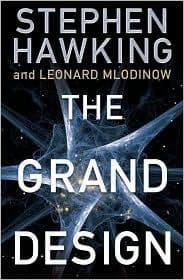
The Grand Design
التصميم العظيم
Y a-t-il un grand architecte dans l'univers ?
The laws of physics alone, particularly M-theory and the multiverse, suffice to explain the origin and fine-tuning of the universe without any appeal to a creator God.
Editorial summary
This work presents Stephen Hawking's culminating statement on cosmology and its implications for the existence of God, arguing that modern physics renders divine explanation unnecessary. Hawking contends that the universe's origin and apparent design can be fully explained through the laws of physics, specifically M-theory, without recourse to supernatural causation. The book directly challenges both cosmological and fine-tuning arguments for God's existence, positioning itself as a decisive intervention in the science-religion debate.
Hawking's central thesis rests on the claim that the universe can and must create itself from nothing due to the law of gravity. He argues that because gravity exists, the universe can spontaneously generate itself, making God superfluous as an explanatory principle. The work develops this position through an exposition of M-theory, which posits multiple universes with varying physical constants. This multiverse framework, Hawking maintains, dissolves the fine-tuning problem by making our universe's apparently improbable parameters merely one actualization among countless possibilities.
The methodological approach combines popular science exposition with philosophical argumentation, though critics have noted the work ventures beyond physics into metaphysical territory. Hawking explicitly engages with traditional natural theology, particularly the design argument's contemporary formulation as fine-tuning. He dismisses philosophical questions about why there is something rather than nothing as meaningless, asserting that physics alone can answer what he considers properly formulated questions about existence.
The work's significance lies partly in its author's stature as arguably the world's most famous scientist, lending popular authority to its atheistic conclusions. Within academic discourse, it crystallizes a strong scientistic position that reduces all meaningful questions to those addressable by physics. The book provoked substantial response from theologians and philosophers who questioned its philosophical assumptions, particularly the coherence of self-causation and the explanatory sufficiency of physical laws.
Hawking's contribution represents a bold assertion of scientific naturalism against theistic explanation. While not philosophically sophisticated by academic standards, the work's influence stems from its uncompromising claim that modern physics has definitively answered questions traditionally reserved for theology. It exemplifies the confidence of contemporary physical sciences in their explanatory scope while revealing ongoing tensions about the proper boundaries between scientific and philosophical inquiry.
Structured analysis
Argument formulations engaged
Related works
Hawking, Stephen (2010). The Grand Design.
@book{the-grand-design,
  author    = {Hawking, Stephen},
  title     = {The Grand Design},
  year      = {2010},
  url       = {https://god-database.com/en/works/the-grand-design}
}