
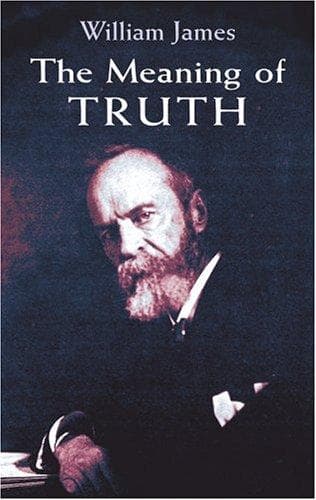
The Meaning of Truth
معنى الحقيقة
La Signification de la Vérité
Editorial summary
This monograph represents James's final systematic defense of pragmatism against its philosophical critics, particularly those who accused the movement of reducing truth to mere expediency. Written as a sequel to his earlier Pragmatism (1907), the work addresses misunderstandings and objections raised by rationalist philosophers, notably F.H. Bradley and Josiah Royce, while clarifying pragmatism's theory of truth and its implications for metaphysical and religious questions.
James argues that truth consists not in static correspondence between ideas and reality but in the dynamic process of verification through experience. Truth "happens" to an idea when it successfully guides action and coheres with the totality of experience. This processual understanding challenges the intellectualist notion that truth exists as a timeless relation independent of human activity. For James, abstract concepts gain meaning only through their practical consequences in lived experience.
The work's significance for debates about God emerges through James's treatment of religious truth-claims. He contends that religious propositions, like all ideas, prove true insofar as they work satisfactorily in the total context of experience. This approach sidesteps traditional metaphysical arguments about God's existence, focusing instead on the pragmatic difference religious belief makes in human life. James maintains that if belief in God produces beneficial consequences—moral energy, cosmic comfort, social cohesion—and harmonizes with other verified truths, it possesses pragmatic validity regardless of its correspondence to an unknowable absolute reality.
Against rationalist critics who demand certainty and logical proof, James defends the legitimacy of belief based on its fruits rather than its rational foundations. He argues that the demand for absolute verification before belief paralyzes action and ignores how most human knowledge operates through trust, hypothesis, and gradual confirmation. This epistemological stance opens space for religious commitment as a reasonable option when such belief enhances life and coheres with experience.
The monograph's contribution lies in shifting debates about God from questions of metaphysical proof to questions of experiential consequence. By reconceiving truth as process rather than possession, James provides philosophical justification for a pragmatic approach to religious questions that evaluates beliefs by their capacity to enrich human existence. This move anticipates later developments in religious naturalism and non-foundationalist theology, making the work essential for understanding how pragmatism transformed modern discussions of religious truth and rational justification for belief in God.
Argument formulations engaged
Related works
James, William (1909). The Meaning of Truth. Longmans, Green & Co..
@book{the-meaning-of-truth-1909,
  author    = {James, William},
  title     = {The Meaning of Truth},
  year      = {1909},
  publisher = {Longmans, Green & Co.},
  url       = {https://god-database.com/en/works/the-meaning-of-truth-1909}
}