
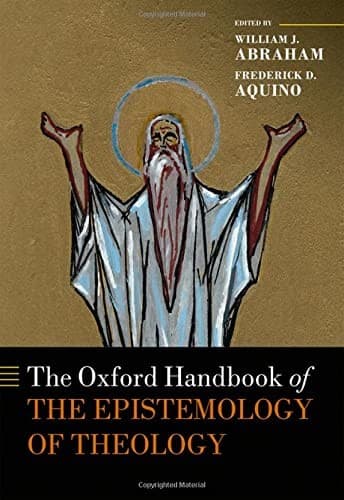
The Oxford Handbook of the Epistemology of Theology
دليل أكسفورد لإبستمولوجيا علم اللاهوت
Manuel d'Oxford de l'épistémologie de la théologie
Editorial summary
This handbook presents a comprehensive examination of the epistemological questions surrounding theological knowledge claims. Abraham brings together diverse philosophical perspectives to address fundamental issues about how theological beliefs can be justified, what counts as evidence in theology, and whether religious knowledge possesses distinctive epistemological features that differentiate it from other domains of inquiry.
The volume systematically explores multiple epistemological frameworks and their application to theological questions. Contributors examine traditional approaches including natural theology, which seeks to establish theological truths through reason and empirical observation, and revealed theology, which grounds knowledge claims in divine disclosure. The work engages extensively with contemporary epistemological debates, including discussions of reformed epistemology, virtue epistemology, and social epistemology as they apply to religious belief formation and justification.
A central concern throughout the handbook involves the relationship between faith and reason. Various chapters address whether theological beliefs require evidential support comparable to scientific or historical claims, or whether they operate according to distinct epistemic norms. The volume examines arguments from philosophers who contend that religious beliefs can be properly basic and rationally held without inferential evidence, as well as critics who maintain that theological claims require the same evidential standards as any other knowledge claims.
The handbook also addresses epistemological challenges specific to theology, including the problem of religious diversity, the role of religious experience as a source of knowledge, and questions about divine hiddenness. Contributors analyze how different religious traditions approach questions of theological knowledge, examining both Western and non-Western perspectives on religious epistemology.
Abraham's editorial framework emphasizes the interdisciplinary nature of theological epistemology, incorporating insights from philosophy of science, cognitive psychology, and sociology of knowledge. The volume examines how communal practices, liturgical participation, and spiritual formation might function as sources of theological knowledge alongside more traditional philosophical arguments.
The work serves as a crucial reference for understanding contemporary debates about the rationality and justification of religious belief. By presenting multiple perspectives rather than advocating for a single epistemological approach, the handbook provides scholars with a comprehensive overview of the field while highlighting ongoing controversies about the nature and possibility of theological knowledge.
Argument formulations engaged
Related works
Abraham, William J. (2017). The Oxford Handbook of the Epistemology of Theology. Oxford University Press.
@book{the-oxford-handbook-of-the-epistemology-,
  author    = {Abraham, William J.},
  title     = {The Oxford Handbook of the Epistemology of Theology},
  year      = {2017},
  publisher = {Oxford University Press},
  url       = {https://god-database.com/en/works/the-oxford-handbook-of-the-epistemology-of-theology-2017}
}