
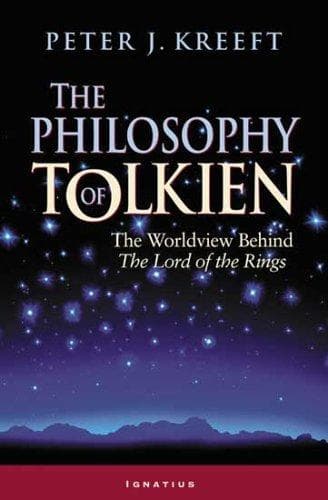
The Philosophy of Tolkien: The Worldview Behind The Lord of the Rings
فلسفة تولكين: النظرة العالمية وراء سيد الخواتم
La Philosophie de Tolkien : La vision du monde derrière Le Seigneur des Anneaux
Editorial summary
Peter Kreeft's monograph examines the philosophical and theological foundations underlying J.R.R. Tolkien's literary works, arguing that The Lord of the Rings embodies a coherent Christian worldview that addresses fundamental questions about God, evil, meaning, and human nature. While ostensibly a work of literary criticism, Kreeft's analysis contributes to contemporary debates about God by demonstrating how theistic presuppositions can structure imaginative literature and, conversely, how such literature can serve as a vehicle for theological reflection.
Kreeft approaches Tolkien's work through a distinctly Thomistic lens, identifying parallels between Middle-earth's metaphysical structure and classical Christian theology. He argues that Tolkien's subcreation operates according to principles derived from belief in a transcendent Creator, even though God remains unnamed within the narrative. This indirect approach to theological questions, Kreeft suggests, allows Tolkien to explore divine themes without explicit religious discourse, potentially reaching audiences resistant to direct theological argumentation.
The work engages critically with secular interpretations of Tolkien that minimize or dismiss the religious dimensions of his writing. Against purely psychological, political, or mythological readings, Kreeft maintains that the coherence and power of Tolkien's vision stem from its grounding in Christian metaphysics. He examines how concepts of providence, free will, sacrifice, and redemption function within the narrative, arguing these elements reflect not merely literary devices but philosophical commitments about reality's ultimate nature.
Kreeft's methodology combines textual analysis with philosophical exposition, drawing on Tolkien's letters and essays alongside the fiction itself. He positions Tolkien within the tradition of Christian humanism, linking him to figures like Chesterton and Lewis while distinguishing his more subtle approach to religious themes. The monograph addresses contemporary debates about literature's capacity to convey truth, defending an understanding of myth as potentially truth-bearing rather than merely entertaining.
The significance of Kreeft's work lies in its demonstration of how theistic worldviews can inform artistic creation without producing propaganda. By analyzing Tolkien's implicit theology, Kreeft contributes to discussions about the relationship between faith and imagination, the possibility of natural theology, and the role of beauty in apologetics. His argument suggests that engagement with transcendent questions need not require explicit theological discourse, potentially offering insights for how theistic perspectives might engage contemporary secular culture.
Argument formulations engaged
Related works
Kreeft, Peter (2005). The Philosophy of Tolkien: The Worldview Behind The Lord of the Rings. Ignatius Press.
@book{the-philosophy-of-tolkien-the-worldview-,
  author    = {Kreeft, Peter},
  title     = {The Philosophy of Tolkien: The Worldview Behind The Lord of the Rings},
  year      = {2005},
  publisher = {Ignatius Press},
  url       = {https://god-database.com/en/works/the-philosophy-of-tolkien-the-worldview-behind-the-lord-of-the-rings-2005}
}