
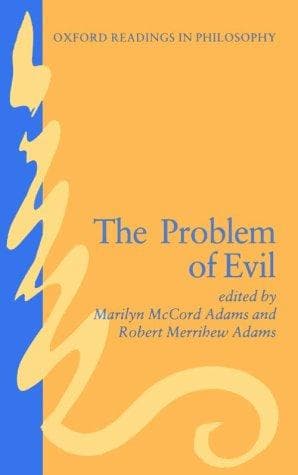
The Problem of Evil
مشكلة الشر
Le Problème du mal
The existence of evil does not logically or evidentially refute theism, provided that adequate defenses and theodicies can be constructed to show how an omnipotent, omniscient, and perfectly good God might permit suffering.
Editorial summary
This edited volume brings together significant contemporary philosophical treatments of the problem of evil, examining how the existence of suffering challenges theistic belief. Adams assembles contributions that represent the most sophisticated developments in analytic philosophy of religion since the 1970s, particularly focusing on refinements to the free will defense and responses to evidential formulations of the problem.
The collection traces the evolution from logical to evidential versions of the problem of evil. Where earlier philosophers like Mackie argued that evil's existence logically contradicts an omnipotent, omniscient, and omnibenevolent God, contemporary discussions recognize that logical compatibility can be established through possible explanations. The volume's contributors therefore grapple with the more pressing evidential challenge: whether the amount, distribution, and apparent gratuitousness of evil make theism improbable, even if not impossible.
Central to the volume is extensive engagement with Alvin Plantinga's free will defense, which argues that God's creation of creatures with libertarian free will represents a value that potentially justifies permitting moral evil. Contributors examine whether this defense adequately addresses natural evil, whether it requires controversial metaphysical commitments about freedom, and how it relates to divine providence. The collection also features important work on skeptical theism, which questions whether humans can reliably judge which evils are genuinely gratuitous given our cognitive limitations.
Adams's editorial choices reflect the increasing sophistication of theistic responses to evil. Rather than simply defending logical consistency, contributors develop theodicies that attempt to explain evil's actual purposes, explore the resources of specifically Christian doctrines like incarnation and atonement, and examine how religious responses to suffering differ from purely philosophical ones. The volume engages seriously with critics like William Rowe who argue that seemingly pointless evils provide strong evidence against theism.
The collection's significance lies in demonstrating how analytic philosophy of religion has moved beyond simple logical puzzles to nuanced discussions of probability, value theory, and epistemic limitations. By bringing together defensive strategies (showing evil doesn't disprove God) with constructive theodicies (explaining why God permits evil), Adams presents the problem of evil as a living philosophical issue requiring continued sophisticated analysis rather than a settled objection to theistic belief.
Argument formulations engaged
Related works
Adams, Robert Merrihew The Problem of Evil.
@book{the-problem-of-evil,
  author    = {Adams, Robert Merrihew},
  title     = {The Problem of Evil},
  year      = {n.d.},
  url       = {https://god-database.com/en/works/the-problem-of-evil}
}