
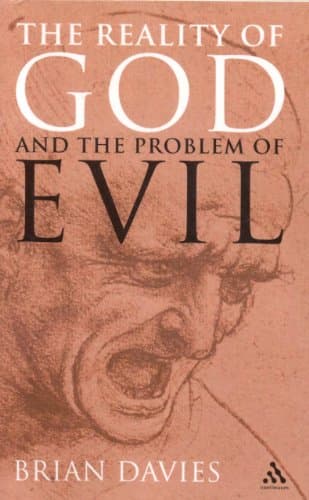
The Reality of God And the Problem of Evil
حقيقة الله ومشكلة الشر
La Réalité de Dieu et le problème du mal
The problem of evil, properly understood within a classical theist framework, does not constitute a decisive refutation of belief in God, because the nature of God and the nature of evil must both be reconceived before the argument can be fairly assessed.
Editorial summary
Brian Davies presents a comprehensive philosophical defense of theistic belief against the problem of evil, offering a distinctive approach within the analytic tradition that draws heavily on Thomistic resources. The work systematically examines how the existence of evil and suffering can be reconciled with belief in an omnipotent, omniscient, and perfectly good God, engaging critically with contemporary formulations of the problem while advancing a classical theistic response.
Davies challenges the fundamental assumptions underlying most contemporary discussions of the problem of evil. He argues that many modern philosophers, both theistic and atheistic, operate with an anthropomorphic conception of God that treats divine goodness as merely a supreme version of human moral goodness. Against this view, Davies develops a classical theistic understanding derived from Aquinas, maintaining that God's goodness differs qualitatively from creaturely goodness. This metaphysical framework proves crucial to his response to the problem of evil.
The author engages extensively with leading contemporary philosophers including J.L. Mackie, William Rowe, and Alvin Plantinga. While acknowledging the logical coherence of Plantinga's free will defense, Davies argues that such approaches concede too much to the problem's framing. He contends that the very formulation of the problem of evil often presupposes a mistaken view of divine agency and goodness. God, properly understood, is not a moral agent subject to obligations but rather the source of all being and goodness.
Davies addresses both logical and evidential versions of the problem of evil, arguing that neither succeeds in demonstrating any incompatibility between God's existence and the reality of evil. He maintains that evil is fundamentally a privation rather than a positive reality requiring divine causation. This privation theory, combined with his account of divine transcendence, allows Davies to argue that God permits but does not directly cause evil, while remaining sovereign over creation.
The work makes a significant contribution by retrieving classical theistic resources for contemporary analytic philosophy of religion. Davies demonstrates how Thomistic metaphysics provides sophisticated conceptual tools often overlooked in modern debates. His approach offers theists an alternative to defensive strategies that accept skeptical premises, instead questioning the coherence of expecting God to conform to human moral categories. This philosophical reframing of the debate's fundamental terms represents the work's most important contribution to ongoing discussions about God and evil.
Structured analysis
Argument formulations engaged
Davies, Brian (2006). The Reality of God And the Problem of Evil.
@book{the-reality-of-god-and-the-problem-of-ev,
  author    = {Davies, Brian},
  title     = {The Reality of God And the Problem of Evil},
  year      = {2006},
  url       = {https://god-database.com/en/works/the-reality-of-god-and-the-problem-of-evil}
}