
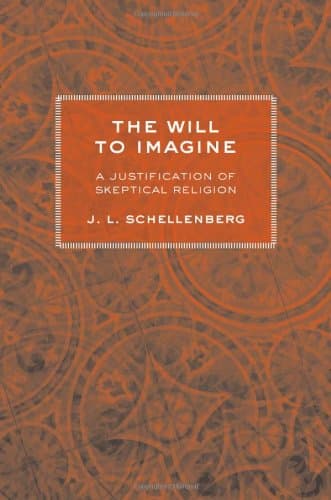
The Will to Imagine: A Justification of Skeptical Religion
إرادة التخيل: تبرير الدين الشكي
La Volonté d'Imaginer : Une Justification de la Religion Sceptique
Editorial summary
This monograph presents a novel philosophical framework for religious engagement that eschews traditional belief in favor of imaginative faith. Schellenberg develops his "skeptical religion" as a response to what he terms "ultimism" - the claim that there exists an ultimate, salvific reality. Rather than believing or disbelieving in ultimism, he advocates a middle path of imaginative engagement that remains epistemically responsible while preserving religious possibility.
The work systematically addresses the predicament of religious uncertainty in contemporary philosophy. Schellenberg argues that given humanity's relatively early stage of intellectual development and the profound nature of religious questions, neither confident belief nor dismissive atheism represents an appropriate response. Instead, he proposes that individuals can legitimately adopt religious imagination as a mode of engagement that acknowledges epistemic limitations while remaining open to transcendent possibilities.
Central to his argument is the distinction between belief and imagination. While belief involves holding propositions to be true, imagination involves entertaining possibilities without epistemic commitment. Schellenberg contends that such imaginative faith can generate genuine religious responses - including worship, ethical transformation, and experiential engagement - without requiring the believer to make claims that outstrip available evidence. This approach draws on pragmatist traditions while engaging contemporary epistemology of religion.
The monograph critically examines both traditional theism and contemporary atheism, finding each wanting in light of our epistemic situation. Against theologians who demand belief despite uncertainty, Schellenberg insists on intellectual integrity. Against atheists who dismiss religious possibilities prematurely, he argues for keeping options open given humanity's cognitive limitations and the stakes involved in religious questions.
Schellenberg's methodology combines analytic philosophy with phenomenological insights about religious experience. He engages extensively with William James's will to believe while developing a more cautious position that privileges imagination over belief. The work also responds to evidentialist challenges from philosophers like William Clifford and contemporary critics of religion.
This contribution reframes debates about rational religion by offering a third way between belief and disbelief. Its significance lies in providing intellectually honest individuals a means of religious engagement that respects both scientific understanding and spiritual aspiration. The work challenges assumptions on all sides of religious debates, proposing that the proper response to ultimate questions may be neither yes nor no, but rather a disciplined, imaginative "perhaps."
Argument formulations engaged
Related works
Schellenberg, J. L. (2009). The Will to Imagine: A Justification of Skeptical Religion. Cornell University Press.
@book{the-will-to-imagine-a-justification-of-s,
  author    = {Schellenberg, J. L.},
  title     = {The Will to Imagine: A Justification of Skeptical Religion},
  year      = {2009},
  publisher = {Cornell University Press},
  url       = {https://god-database.com/en/works/the-will-to-imagine-a-justification-of-skeptical-religion-2009}
}