
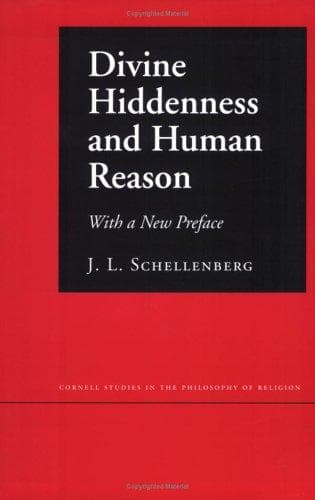
Divine Hiddenness and Human Reason
الخفاء الإلهي والعقل البشري
L'occultation divine et la raison humaine
The existence of reasonable, non-culpable non-belief in God constitutes decisive evidence against the existence of a perfectly loving God, since such a being would ensure that all open-hearted seekers could enter into conscious relationship with it.
Editorial summary
This monograph presents a systematic philosophical argument against the existence of God based on the phenomenon of divine hiddenness. Schellenberg develops what has become known as the "argument from divine hiddenness" or the "problem of nonbelief," which challenges theistic claims by examining the implications of reasonable nonbelief in God's existence.
The central argument proceeds from the premise that if a perfectly loving God exists, such a being would ensure that all persons capable of relationship with the divine would have sufficient evidence to believe in God's existence. Schellenberg argues that genuine, nonresistant nonbelief exists—that is, there are individuals who honestly seek truth about God's existence but find themselves unable to believe due to insufficient evidence. This phenomenon, the author contends, is incompatible with the existence of a perfectly loving God who desires relationship with all persons.
Employing rigorous analytic methodology, Schellenberg carefully distinguishes between culpable and inculpable nonbelief, focusing on those who would believe if presented with adequate evidence but find none forthcoming. The work engages directly with traditional theistic defenses, including appeals to human free will, the value of epistemic distance, and the soul-making theodicy. The author systematically examines and rejects these explanations, arguing that none adequately accounts for why a loving God would permit nonresistant nonbelief.
The monograph's significance lies in its shift of focus from the traditional problem of evil to the problem of divine silence. While the problem of evil questions how a good God could permit suffering, Schellenberg's argument targets the epistemic dimension of divine-human relationship. This approach challenges not only classical theism but also reformed epistemology and other contemporary theistic frameworks that emphasize the rationality of belief without evidence.
Within the secular-naturalist tradition, this work provides a powerful tool for philosophical atheology. Unlike arguments that simply assert the absence of evidence for God, Schellenberg demonstrates how this absence itself constitutes evidence against God's existence, given certain assumptions about divine love and human psychology. The argument has generated substantial response from theistic philosophers, establishing divine hiddenness as a central topic in contemporary philosophy of religion alongside the traditional arguments for and against God's existence.
Argument formulations engaged
Related works
Schellenberg, J. L. Divine Hiddenness and Human Reason. Cornell University Press.
@book{divine-hiddenness-and-human-reason,
  author    = {Schellenberg, J. L.},
  title     = {Divine Hiddenness and Human Reason},
  year      = {n.d.},
  publisher = {Cornell University Press},
  url       = {https://god-database.com/en/works/divine-hiddenness-and-human-reason}
}