
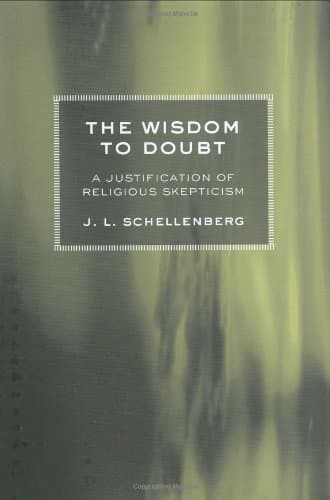
The Wisdom to Doubt: A Justification of Religious Skepticism
الحكمة في الشك: تبرير الشك الديني
La Sagesse de Douter : Une Justification du Scepticisme Religieux
Editorial summary
This monograph presents a systematic defense of religious skepticism, arguing that reasonable doubt about religious claims represents the most epistemically responsible position given current evidence and human limitations. Schellenberg develops a comprehensive framework for understanding why suspension of judgment on religious matters constitutes wisdom rather than intellectual failure.
The work builds upon Schellenberg's previous contributions to philosophy of religion while extending his analysis beyond the problem of divine hiddenness. He constructs a multi-layered argument that religious skepticism emerges naturally from careful consideration of four key factors: the limitations of human cognitive faculties, the ambiguity of religious evidence, the diversity of religious claims, and the evolutionary origins of religious belief. Rather than advocating atheism, Schellenberg defends a more nuanced position that acknowledges both the possibility of religious truth and the current insufficiency of grounds for belief.
Central to Schellenberg's methodology is his distinction between skepticism and denial. He argues that religious skeptics need not claim that religious propositions are false, only that we lack adequate justification for accepting them as true. This approach allows him to sidestep traditional debates between theists and atheists while maintaining intellectual rigor. He examines various religious experiences, arguments for God's existence, and purported revelations, demonstrating how each fails to provide the kind of evidence that would warrant confident belief given the stakes involved.
The book engages critically with reformed epistemology, evidentialist approaches, and pragmatic justifications for religious belief. Schellenberg particularly challenges the notion that faith can legitimately bridge evidential gaps, arguing instead that intellectual humility demands acknowledging our epistemic limitations. He addresses potential objections from religious believers who might argue that skepticism itself requires a kind of faith, showing how his position remains consistent with general epistemic principles.
Schellenberg's contribution lies in providing a philosophically sophisticated alternative to both dogmatic atheism and uncritical faith. His work demonstrates how religious skepticism can be maintained without hostility toward religion or believers, while still insisting on rigorous intellectual standards. The monograph's significance extends beyond philosophy of religion to broader questions about rational belief formation, the ethics of belief, and the relationship between evidence and commitment in domains of ultimate concern.
Argument formulations engaged
Related works
Schellenberg, J. L. (2007). The Wisdom to Doubt: A Justification of Religious Skepticism. Cornell University Press.
@book{the-wisdom-to-doubt-a-justification-of-r,
  author    = {Schellenberg, J. L.},
  title     = {The Wisdom to Doubt: A Justification of Religious Skepticism},
  year      = {2007},
  publisher = {Cornell University Press},
  url       = {https://god-database.com/en/works/the-wisdom-to-doubt-a-justification-of-religious-skepticism-2007}
}