
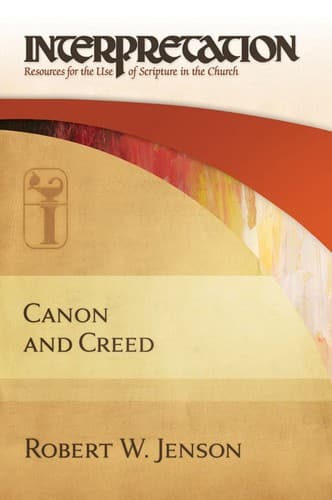
Canon and Creed
القانون والعقيدة
Canon et Credo
Editorial summary
This monograph examines the mutually constitutive relationship between scriptural canon and ecclesial creed in Christian theology, arguing that neither can be properly understood in isolation from the other. Jenson contends that the formation of biblical canon and the development of creedal statements represent interdependent processes through which the church articulates and maintains its identity across time.
The work challenges prevalent assumptions about the priority of scripture over tradition or vice versa. Jenson demonstrates that the very determination of which texts constitute scripture required prior theological commitments expressed in proto-creedal forms. Conversely, the creeds themselves emerge from and continually reference scriptural narratives. This reciprocal relationship, he argues, reflects the inherently communal and temporal nature of Christian truth claims about God.
Central to Jenson's argument is the notion that both canon and creed function as rules for faithful speech about God. The canon provides the authoritative narrative framework within which God's self-revelation unfolds, while the creed offers hermeneutical guidance for reading these narratives coherently. He critiques modern approaches that treat scripture as a self-interpreting text independent of ecclesial tradition, as well as those that subordinate biblical authority to dogmatic formulations.
The monograph engages extensively with patristic sources, particularly examining how figures like Irenaeus and Athanasius understood the relationship between scriptural interpretation and regula fidei. Jenson argues that their approach offers resources for contemporary theology to move beyond sterile debates between sola scriptura protestantism and tradition-heavy catholicism. He proposes instead a dynamic understanding where canon and creed together constitute the church's ongoing conversation about the triune God's identity and acts.
Methodologically, the work combines historical investigation with systematic theological reflection. Jenson traces the parallel development of canonical consciousness and creedal formulation through the first four centuries of Christianity, while simultaneously offering constructive proposals for how this relationship should inform current theological practice. His analysis demonstrates particular concern for how trinitarian doctrine emerges from and structures the reading of biblical texts.
The monograph's significance lies in its sophisticated account of how Christian communities establish and maintain normative discourse about God. By refusing to separate questions of biblical authority from ecclesial interpretation, Jenson provides a nuanced framework for understanding how theological truth claims function within believing communities.
Argument formulations engaged
Related works
Jenson, Robert W. (2010). Canon and Creed. Westminster John Knox Press.
@book{canon-and-creed-2010,
  author    = {Jenson, Robert W.},
  title     = {Canon and Creed},
  year      = {2010},
  publisher = {Westminster John Knox Press},
  url       = {https://god-database.com/en/works/canon-and-creed-2010}
}