
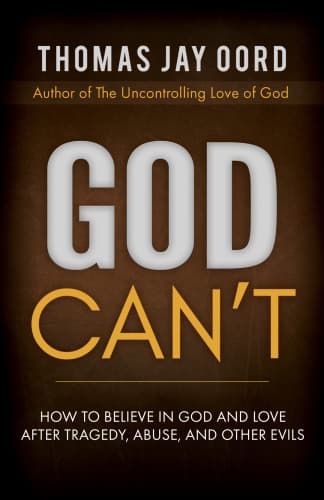
God Can't: How to Believe in God and Love after Tragedy, Abuse, and Other Evils
الله لا يستطيع: كيفية الإيمان بالله والحب بعد المأساة والإساءة والشرور الأخرى
Dieu ne peut pas : Comment croire en Dieu et aimer après la tragédie, l'abus et autres maux
Editorial summary
This monograph presents a systematic theological response to the problem of evil through a reconceptualization of divine power. Thomas Jay Oord develops what he terms "essential kenosis theology," arguing that God cannot unilaterally prevent genuine evil because divine love necessarily involves self-limitation. Against classical theism's emphasis on omnipotence, Oord proposes that God's inability to control creatures stems not from voluntary restraint but from the essential nature of love itself.
The work emerges from both academic theology and pastoral concern, addressing readers who struggle to reconcile belief in a loving God with experiences of tragedy, abuse, and suffering. Oord critiques traditional theodicies that preserve divine omnipotence at the cost of making God complicit in evil. He rejects approaches suggesting God permits evil for greater goods, arguing such views render God morally culpable. Instead, he advances a process-influenced theology wherein God necessarily provides possibilities and initial aims to all entities but cannot override creaturely freedom or natural regularities.
Central to Oord's argument is his redefinition of divine power as uncontrolling love. Drawing on biblical exegesis, philosophical theology, and scientific insights about indeterminacy, he contends that genuine love requires genuine freedom in the beloved. This applies universally from quantum particles to human persons. God works persuasively rather than coercively, always acting to promote wellbeing but unable to guarantee outcomes. This reconceptualization addresses why God does not prevent horrific evils while maintaining divine goodness and ongoing providential action.
The monograph's significance lies in its attempt to preserve robust divine action while accounting for genuine evil. Oord engages extensively with alternative theodicies, process thought, and open theism, positioning essential kenosis as a distinctive option. His approach challenges both classical theism's emphasis on divine control and process theology's limitations on divine action. The work contributes to contemporary debates about divine action, theodicy, and the coherence of theistic belief after tragedy.
While some may find Oord's limitations on divine power theologically problematic, his proposal offers a systematic alternative for those seeking to maintain faith while taking evil seriously. The work demonstrates how reconceiving divine power as essentially self-limiting love might preserve both divine goodness and the reality of evil, providing resources for theological reflection and pastoral response to suffering.
Argument formulations engaged
Oord, Thomas Jay (2019). God Can't: How to Believe in God and Love after Tragedy, Abuse, and Other Evils. Thomas Oord.
@book{god-cant-how-to-believe-in-god-and-love-,
  author    = {Oord, Thomas Jay},
  title     = {God Can't: How to Believe in God and Love after Tragedy, Abuse, and Other Evils},
  year      = {2019},
  publisher = {Thomas Oord},
  url       = {https://god-database.com/en/works/god-cant-how-to-believe-in-god-and-love-after-tragedy-abuse-and-other-evils-2019}
}