
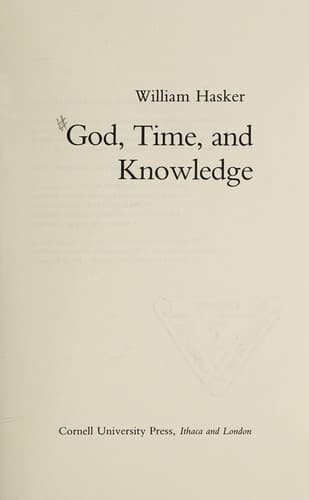
God, Time, and Knowledge
الله والزمن والمعرفة
Dieu, temps et connaissance
Editorial summary
This monograph examines the philosophical tensions between divine omniscience and human free will, offering a critical assessment of traditional theological positions while advocating for a modified understanding of God's relationship to time and knowledge. Hasker systematically analyzes how classical theism's commitment to divine foreknowledge creates seemingly insurmountable difficulties for libertarian freedom, the view that humans possess genuine alternative possibilities in their choices.
The work begins by establishing the logical incompatibility between exhaustive divine foreknowledge and libertarian free will. Hasker demonstrates that if God knows infallibly what any person will do tomorrow, that person cannot do otherwise, effectively eliminating genuine freedom. This argument extends beyond simple foreknowledge to challenge theological determinism more broadly, examining how divine sovereignty and providence traditionally conceived undermine meaningful human agency.
Central to Hasker's contribution is his detailed critique of proposed solutions to this dilemma. He examines Boethian attempts to place God outside time, arguing that divine timelessness fails to preserve human freedom while creating additional conceptual problems about God's relationship to temporal creation. Similarly, he analyzes Molinist middle knowledge, which posits God's knowledge of counterfactuals of freedom, showing how this solution ultimately collapses into the same deterministic implications it seeks to avoid.
The monograph's constructive proposal advocates for open theism, though Hasker does not use this term explicitly. He argues that God possesses perfect knowledge of all that can be known, but the future actions of free creatures are not yet determinate realities available for knowing. This limitation represents not a deficiency in divine knowledge but rather reflects the metaphysical status of the future itself. God knows all possibilities and probabilities perfectly while remaining genuinely responsive to human choices as they unfold in time.
Hasker grounds his analysis in careful logical argumentation while engaging substantively with historical theological sources from Augustine through contemporary analytic philosophy of religion. His work challenges philosophers and theologians to reconsider fundamental assumptions about divine attributes, suggesting that perfect providence might require divine responsiveness rather than meticulous predetermination. The monograph's rigorous philosophical analysis demonstrates why traditional formulations of omniscience require revision if human moral responsibility is to be preserved, making it essential reading for those grappling with the perennial tension between divine sovereignty and human freedom.
Argument formulations engaged
Related works
Hasker, William (1989). God, Time, and Knowledge. Cornell University Press.
@book{god-time-and-knowledge-1989,
  author    = {Hasker, William},
  title     = {God, Time, and Knowledge},
  year      = {1989},
  publisher = {Cornell University Press},
  url       = {https://god-database.com/en/works/god-time-and-knowledge-1989}
}