
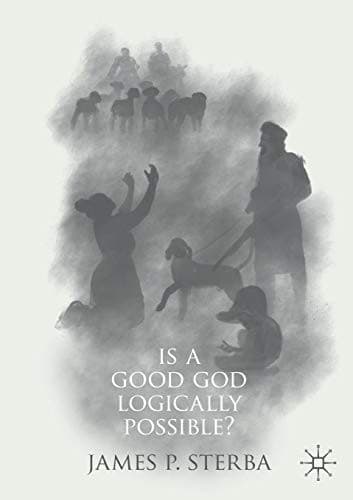
Is a Good God Logically Possible?
هل الإله الخير ممكن منطقياً؟
Un bon Dieu est-il logiquement possible ?
Editorial summary
This monograph presents a systematic philosophical challenge to the logical possibility of an omnipotent, omniscient, and perfectly good God, advancing what Sterba terms a "logical argument from evil." Unlike traditional evidential arguments that question whether suffering makes God's existence improbable, Sterba contends that the mere possibility of preventing significant moral evils while respecting freedom renders God's existence logically impossible.
The work's central innovation lies in its treatment of divine permission and human freedom. Sterba argues that just as ethical humans must sometimes constrain freedom to prevent serious harm, an all-good God would necessarily prevent significant moral evils that serve no greater good. He examines cases where intervention would not violate meaningful freedom—such as preventing a would-be murderer through minor interference or providing critical information to potential victims. The author contends that God's failure to perform such minimal interventions, which any moral agent would undertake, constitutes a logical contradiction with perfect goodness.
Sterba engages extensively with contemporary theodicies, particularly those of Richard Swinburne, Peter van Inwagen, and Marilyn McCord Adams. He systematically addresses free will defenses, soul-making theodicies, and skeptical theism, arguing that each fails to justify divine permission of horrendous evils. His analysis pays special attention to the distribution of suffering, noting that evils disproportionately affect the innocent and vulnerable in ways incompatible with divine justice.
The monograph's methodology combines rigorous logical analysis with concrete moral intuitions, drawing parallels between divine obligations and widely accepted human moral duties. Sterba employs a distinctive "Pauline Principle" framework, arguing that God could not permit evils as means to goods without violating moral constraints that even humans recognize. This approach bridges abstract philosophical theology with practical ethics, making the argument accessible while maintaining analytical rigor.
The work's significance extends beyond academic philosophy of religion to broader questions about moral responsibility and the limits of theodicy. By shifting focus from evidential to logical arguments, Sterba revitalizes classical debates about evil while engaging seriously with theistic philosophers' most sophisticated responses. His conclusion—that belief in God requires abandoning either divine goodness or basic moral intuitions—poses a fundamental challenge to traditional theism that demands careful consideration from believers and skeptics alike.
Argument formulations engaged
Related works
Sterba, James (2019). Is a Good God Logically Possible?. Palgrave Macmillan.
@book{is-a-good-god-logically-possible-2019,
  author    = {Sterba, James},
  title     = {Is a Good God Logically Possible?},
  year      = {2019},
  publisher = {Palgrave Macmillan},
  url       = {https://god-database.com/en/works/is-a-good-god-logically-possible-2019}
}