
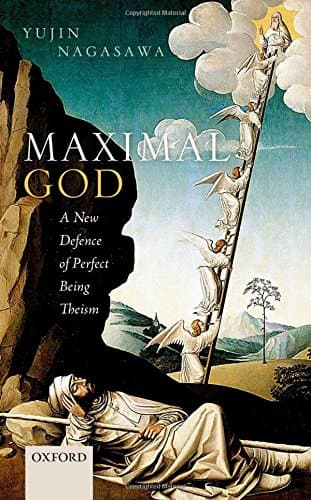
Maximal God: A New Defence of Perfect Being Theism
الإله الأعظم: دفاع جديد عن لاهوت الكائن المثالي
Dieu maximal : Une nouvelle défense du théisme de l'être parfait
Editorial summary
This monograph presents a novel defense of perfect being theism that attempts to circumvent traditional objections by redefining the concept of divine perfection. Nagasawa develops what he terms the "maximal God thesis," which holds that God possesses the maximal consistent set of knowledge, power, and goodness, rather than absolute omniscience, omnipotence, and omnibenevolence. This reformulation represents a significant departure from classical theistic philosophy while maintaining the core intuition that God is the greatest possible being.
The work engages primarily with the logical problem of evil and various paradoxes of omnipotence that have long plagued traditional perfect being theism. Nagasawa argues that these objections succeed only against the claim that God possesses omniproperties in their absolute form. By replacing absolute perfections with maximal consistent perfections, he contends that theism can preserve its essential commitments while avoiding logical contradictions. For instance, rather than claiming God knows all truths, the maximal God thesis holds that God knows all truths that can be consistently known by a perfect being.
Nagasawa's methodology combines analytic philosophy with comparative theology, drawing on both Western and Eastern religious traditions to support his more modest conception of divine attributes. He demonstrates that many religious texts and theological traditions actually support a maximal rather than absolute understanding of divine perfection, suggesting his proposal aligns better with lived religious experience than classical philosophical theism.
The work's significance lies in its potential to reshape debates in philosophy of religion. By lowering the bar for what constitutes divine perfection, Nagasawa provides theists with a more defensible position that sidesteps many classical objections while preserving the worship-worthiness of God. Critics may object that this revision amounts to an unacceptable dilution of the theistic concept of God, effectively conceding too much to atheological arguments.
The monograph contributes to contemporary perfect being theology by offering a middle path between classical theism and more radically revised concepts of divinity. Nagasawa's proposal challenges both theistic and atheistic philosophers to reconsider whether their arguments target the most plausible version of perfect being theism. His work suggests that the God debate need not be confined to defending or attacking the classical omni-God, opening new avenues for philosophical theology.
Argument formulations engaged
Nagasawa, Yujin (2017). Maximal God: A New Defence of Perfect Being Theism. Oxford University Press.
@book{maximal-god-a-new-defence-of-perfect-bei,
  author    = {Nagasawa, Yujin},
  title     = {Maximal God: A New Defence of Perfect Being Theism},
  year      = {2017},
  publisher = {Oxford University Press},
  url       = {https://god-database.com/en/works/maximal-god-a-new-defence-of-perfect-being-theism-2017}
}