
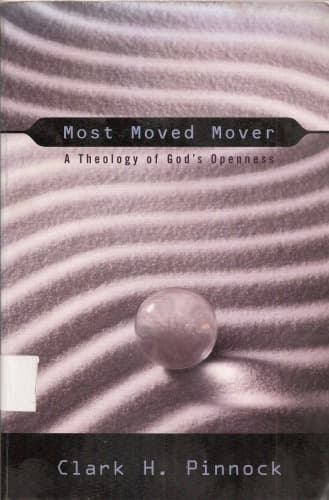
Most Moved Mover: A Theology of God's Openness
المحرك الأكثر تحريكاً: لاهوت انفتاح الله
Le Moteur le Plus Mû : Une Théologie de l'Ouverture de Dieu
Editorial summary
This monograph presents a systematic theological defense of open theism, challenging classical theistic conceptions of divine attributes. Pinnock argues that the traditional understanding of God as timelessly eternal, immutable, and exhaustively omniscient conflicts with biblical portrayals of a God who enters into genuine relationship with creation. The work positions itself against both classical theism, represented by figures like Augustine and Aquinas, and process theology, offering what Pinnock considers a more biblically faithful middle path.
The central thesis concerns divine openness to temporal experience and genuine reciprocity with creatures. Pinnock contends that God possesses dynamic omniscience, knowing all that can be known while the future remains partially open and undetermined. This allows for authentic divine-human interaction, where prayer can influence God and human choices genuinely affect divine plans. The author systematically reinterprets traditional attributes: immutability becomes constancy of character rather than static changelessness; eternity involves everlasting duration rather than timelessness; sovereignty operates through responsive providence rather than meticulous control.
Methodologically, Pinnock prioritizes biblical narrative over philosophical abstraction, though he engages extensively with philosophical theology. He examines scriptural passages depicting divine repentance, surprise, and responsive action, arguing these represent ontological realities rather than mere anthropomorphisms. The work draws on contemporary philosophical discussions of time, modality, and freedom, particularly engaging with William Hasker's philosophical arguments for open theism and responding to critics like William Lane Craig and Paul Helm.
The book's significance lies in its comprehensive articulation of open theism as a coherent theological system. Published during intense evangelical debates about divine foreknowledge, it became a focal point for controversy within conservative Protestant circles. Pinnock addresses practical implications for prayer, providence, and the problem of evil, arguing that open theism better preserves human responsibility and divine love than deterministic alternatives.
While engaging seriously with classical sources, Pinnock ultimately privileges what he perceives as the biblical portrait of a responsive, relational deity. His work represents a major statement in late twentieth-century debates about divine attributes, challenging assumptions shared across denominational lines and provoking extensive scholarly response. The monograph demonstrates how reconceptualizing divine attributes affects entire theological systems, from soteriology to eschatology, making it essential reading for understanding contemporary theological disputes about the nature of God.
Argument formulations engaged
Related works
Pinnock, Clark (2001). Most Moved Mover: A Theology of God's Openness.
@book{most-moved-mover-a-theology-of-gods-open,
  author    = {Pinnock, Clark},
  title     = {Most Moved Mover: A Theology of God's Openness},
  year      = {2001},
  url       = {https://god-database.com/en/works/most-moved-mover-a-theology-of-gods-openness-2001}
}