
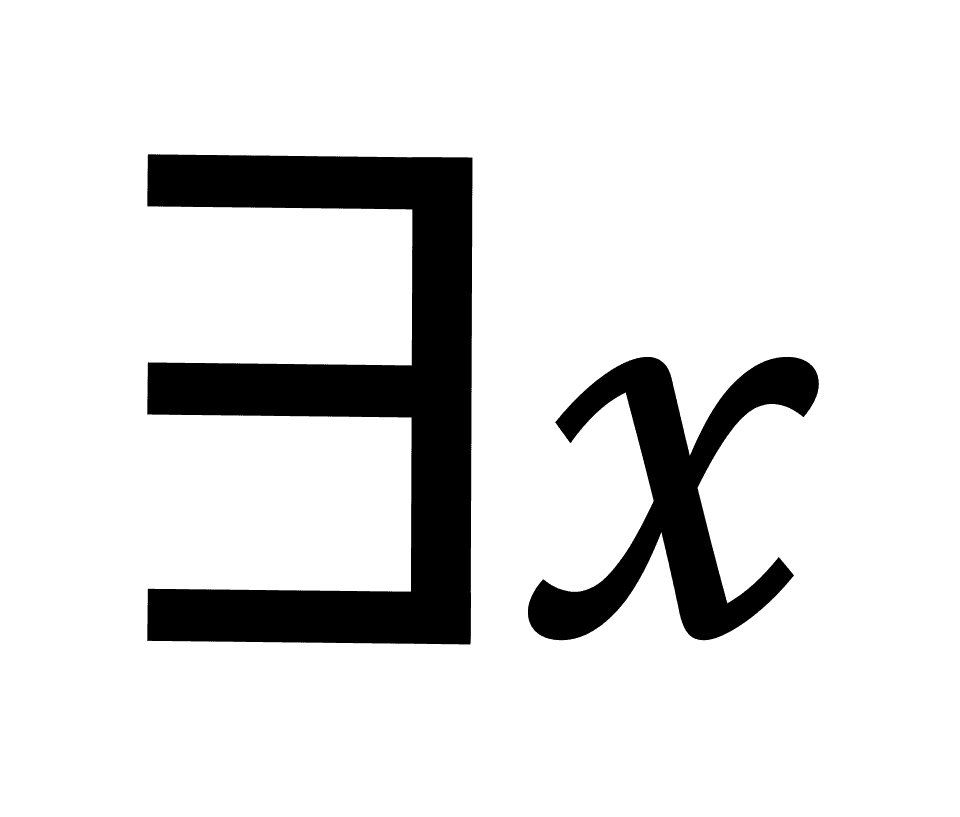
Necessary Existence
الوجود الضروري
L'Existence nécessaire
There exists at least one necessarily existing being, and the best candidate for such a being is the God of classical theism, whose existence can be established through rigorous modal-metaphysical argumentation.
Editorial summary
This monograph presents a rigorous defense of the concept of necessary existence and its application to arguments for God's existence, particularly within the cosmological and ontological argument traditions. Pruss employs the tools of contemporary modal logic and analytic philosophy to rehabilitate and advance classical theistic proofs that depend on the notion of a necessarily existent being.
The work systematically examines what it means for something to exist necessarily rather than contingently, engaging with both historical and contemporary philosophical debates about modality. Pruss argues that the concept of necessary existence is coherent and philosophically respectable, contrary to criticisms from empiricist and naturalist philosophers who have challenged its intelligibility since Hume and Kant. He develops a sophisticated modal framework that distinguishes between different types of necessity and possibility, demonstrating how these distinctions bear on theological questions.
Central to the monograph is a detailed analysis of how necessary existence functions within cosmological arguments, particularly versions of the argument from contingency. Pruss defends the principle of sufficient reason against common objections and shows how it leads to the conclusion that there must be at least one necessarily existent being to explain the existence of contingent reality. He addresses standard counterarguments, including those based on brute facts and quantum indeterminacy, offering novel responses that draw on recent developments in the metaphysics of modality.
The work also contributes to the ontological argument tradition by examining whether necessary existence can function as a perfection or great-making property. Pruss engages critically with both classical formulations from Anselm and Descartes and contemporary modal versions developed by philosophers like Plantinga and Gödel. He argues that properly understood, the concept of necessary existence avoids the standard Kantian criticism that existence is not a real predicate.
Throughout, Pruss situates his arguments within the broader Christian analytic tradition, showing how the concept of necessary existence connects to classical theological attributes like aseity, eternality, and divine simplicity. While maintaining philosophical rigor, he demonstrates the theological significance of these abstract metaphysical debates. The monograph serves as both a defense of traditional natural theology and a contribution to contemporary debates in modal metaphysics, making it valuable for philosophers of religion, systematic theologians, and metaphysicians interested in the intersection of modality and theology.
Structured analysis
Argument formulations engaged
Related works
Pruss, Alexander R. Necessary Existence.
@book{necessary-existence,
  author    = {Pruss, Alexander R.},
  title     = {Necessary Existence},
  year      = {n.d.},
  url       = {https://god-database.com/en/works/necessary-existence}
}