
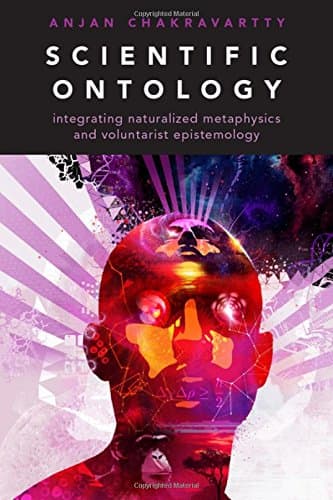
Scientific Ontology: Integrating Naturalized Metaphysics and Voluntarist Epistemology
الوجود العلمي: دمج الميتافيزيقا الطبيعية والإبستيمولوجيا الإرادية
Ontologie scientifique : Intégrer la métaphysique naturalisée et l'épistémologie volontariste
Editorial summary
This monograph develops a sophisticated framework for understanding how scientific knowledge relates to metaphysical claims about reality, with significant implications for natural theology and arguments about God's existence. Chakravartty addresses a fundamental tension in contemporary philosophy of science: how can scientific realists claim knowledge about unobservable entities while maintaining epistemic humility about metaphysical matters?
The work introduces a "voluntarist epistemology" that acknowledges the role of non-evidential factors in theory choice and belief formation. Chakravartty argues that scientists and philosophers legitimately adopt different stances toward theoretical commitments based on varying epistemic values and risk tolerances. This voluntarism does not collapse into relativism but rather recognizes that rational agents can reasonably disagree about which theoretical virtues to prioritize when evidence underdetermines theory choice.
Central to the project is the integration of naturalized metaphysics with scientific practice. Chakravartty contends that science inevitably involves metaphysical commitments about properties, causation, and natural kinds, but these commitments should be constrained by empirical investigation rather than a priori reasoning. He develops a "dispositional realism" that grounds scientific ontology in causal powers while remaining sensitive to the provisional nature of scientific knowledge.
The theological implications emerge through the book's treatment of explanatory scope and metaphysical commitment. By showing how scientific theories necessarily involve metaphysical assumptions that outrun empirical evidence, Chakravartty's framework creates conceptual space for theological explanations that might complement rather than compete with scientific accounts. His voluntarism suggests that choosing between naturalistic and theistic interpretations of scientific findings may depend on prior epistemic stances rather than purely evidential considerations.
The work engages critically with both scientific naturalists who deny any role for metaphysics in science and traditional metaphysicians who divorce philosophical inquiry from empirical constraints. Against figures like Ladyman and Ross, Chakravartty defends the legitimacy of metaphysical theorizing within science. Against rationalist metaphysicians, he insists that scientific findings must inform our ontological commitments.
This contribution matters for the God debate because it undermines simplistic oppositions between scientific and religious worldviews. By demonstrating that science itself requires metaphysical commitments chosen partly on non-evidential grounds, Chakravartty's account suggests that theistic interpretations of nature cannot be dismissed as uniquely unscientific. The framework provides philosophical resources for understanding how scientific and theological perspectives might coexist without compromising the integrity of either domain.
Argument formulations engaged
Chakravartty, Anjan (2017). Scientific Ontology: Integrating Naturalized Metaphysics and Voluntarist Epistemology.
@book{scientific-ontology-integrating-naturali,
  author    = {Chakravartty, Anjan},
  title     = {Scientific Ontology: Integrating Naturalized Metaphysics and Voluntarist Epistemology},
  year      = {2017},
  url       = {https://god-database.com/en/works/scientific-ontology-integrating-naturalized-metaphysics-and-voluntarist-epistemology-2017}
}