
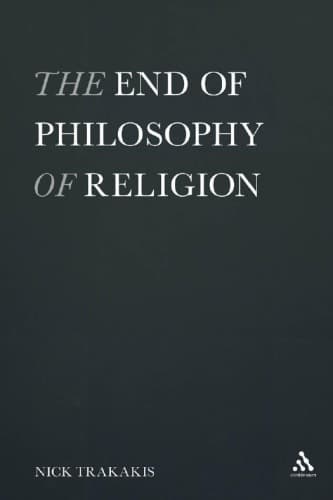
The End of Philosophy of Religion
نهاية فلسفة الدين
La Fin de la Philosophie de la Religion
Editorial summary
This provocative monograph challenges the very foundations of analytic philosophy of religion, arguing that the field has become intellectually bankrupt and methodologically flawed. Trakakis launches a comprehensive critique of contemporary philosophy of religion, particularly as practiced within Anglo-American analytic traditions, contending that the discipline has failed to engage meaningfully with genuine religious experience and has instead become mired in abstract logical puzzles divorced from lived faith.
Central to Trakakis's argument is the claim that philosophy of religion has been co-opted by a narrow form of Christian theism that dominates academic discourse. He demonstrates how the field's preoccupation with proving or disproving God's existence through formal arguments has reduced rich religious traditions to simplistic propositions. This reductionism, he argues, betrays both philosophy and religion by transforming profound existential questions into sterile logical exercises. The work systematically exposes how major figures in analytic philosophy of religion have constructed elaborate theoretical edifices that bear little resemblance to actual religious practice or belief.
Trakakis particularly targets the evidentialist framework that pervades the discipline, where religious beliefs are subjected to the same epistemic standards as scientific hypotheses. He argues this approach fundamentally misunderstands the nature of religious commitment, which operates according to different logic than empirical investigation. The monograph traces how this methodological error has led philosophy of religion into increasingly arcane debates about modal logic and possible worlds while ignoring pressing questions about religious diversity, mystical experience, and the relationship between faith and social justice.
The work's significance lies in its willingness to declare the emperor naked. While others have criticized specific aspects of analytic philosophy of religion, Trakakis calls for abandoning the enterprise entirely in its current form. He suggests that genuine philosophical engagement with religion requires new methodologies drawn from continental philosophy, phenomenology, and non-Western traditions. His argument resonates with broader concerns about the limitations of analytic philosophy when addressing human meaning and experience.
By proclaiming the "end" of philosophy of religion, Trakakis paradoxically seeks its renewal. He envisions a transformed discipline that takes seriously the particularities of religious traditions, the insights of apophatic theology, and the irreducibility of religious experience to propositional content. This radical reimagining challenges scholars to move beyond tired debates about theistic proofs toward more authentic engagement with religion as a living human phenomenon.
Argument formulations engaged
Related works
Trakakis, Nick (2008). The End of Philosophy of Religion. Continuum.
@book{the-end-of-philosophy-of-religion-2008,
  author    = {Trakakis, Nick},
  title     = {The End of Philosophy of Religion},
  year      = {2008},
  publisher = {Continuum},
  url       = {https://god-database.com/en/works/the-end-of-philosophy-of-religion-2008}
}