
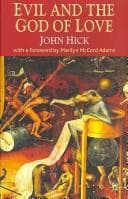
Evil and the God of Love
الشر وإله المحبة
Le mal et le Dieu d'amour
Editorial summary
John Hick's Evil and the God of Love represents a watershed contribution to theodicy that fundamentally reframes how Christian philosophy addresses the problem of evil. Writing against the backdrop of post-war theological reflection, Hick challenges the dominant Augustinian tradition that has shaped Western Christian responses to suffering for over a millennium. His work directly confronts the classical free-will defense, which attributes evil to human misuse of freedom and traces natural evil to a primordial fall, arguing that this framework fails both philosophically and empirically.
Hick's central innovation lies in recovering and developing what he terms an "Irenaean" theodicy, drawing from the second-century church father Irenaeus of Lyons. Rather than viewing the world as a perfect creation corrupted by sin, Hick presents it as an intentionally challenging environment designed for "soul-making." He argues that God creates humans not as finished products but as beings in process, requiring genuine moral struggle and development to achieve spiritual maturity. This teleological framework shifts the focus from explaining evil's origin to understanding its purpose within divine providence.
The work systematically engages major philosophical objections to theism, particularly those raised by Hume and modern atheistic philosophers who view evil as incompatible with an omnipotent, benevolent deity. Hick's response involves reconceptualizing divine goodness: rather than eliminating suffering, God permits it as necessary for authentic human development. He argues that a world without genuine challenges, risks, and consequences would preclude the formation of moral character and spiritual growth.
Methodologically, Hick combines rigorous philosophical analysis with biblical exegesis and empirical observations about human psychology and development. He examines how various religious traditions address suffering while maintaining his distinctly Christian framework. His engagement with process theology and evolutionary thought demonstrates an openness to contemporary intellectual currents while preserving core theistic commitments.
The monograph's lasting significance lies in shifting theodicy from defensive apologetics to constructive theology. By reframing evil as instrumental rather than merely permitted, Hick opens new avenues for reconciling belief in God with the reality of suffering. His soul-making theodicy has profoundly influenced subsequent philosophical theology, spawning extensive debate about whether his account adequately addresses the scope and intensity of evil while maintaining divine benevolence. The work remains essential for understanding contemporary philosophical approaches to the God-evil relationship.
Argument formulations engaged
Related works
Hick, John (1966). Evil and the God of Love. Macmillan.
@book{evil-and-the-god-of-love-1966,
  author    = {Hick, John},
  title     = {Evil and the God of Love},
  year      = {1966},
  publisher = {Macmillan},
  url       = {https://god-database.com/en/works/evil-and-the-god-of-love-1966}
}