
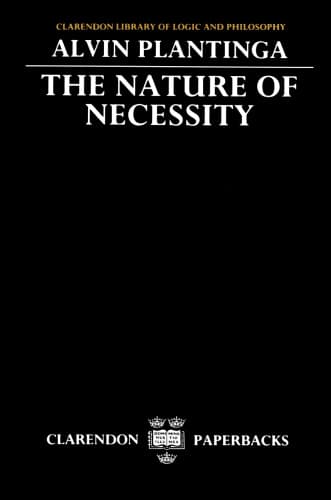
The Nature of Necessity
طبيعة الضرورة
La Nature de la Nécessité
Editorial summary
This monograph represents a watershed moment in analytic philosophy of religion, establishing modal logic as an indispensable tool for theological discourse. Plantinga develops a sophisticated possible worlds semantics to address fundamental questions about necessity, possibility, and existence, with profound implications for arguments concerning God's nature and existence.
The work systematically constructs a framework for understanding modality through possible worlds, where necessary truths hold across all possible worlds while contingent truths vary between them. Plantinga argues that this apparatus clarifies longstanding philosophical puzzles about essence, identity, and existence. His treatment of essential properties—those an object possesses in every world where it exists—proves particularly significant for theological discussions about divine attributes.
Central to Plantinga's project is his defense of de re modality against Quinian skepticism. Where Quine argued that necessity applies only to propositions (de dicto), not to objects and their properties (de re), Plantinga demonstrates that coherent sense can be made of essential properties. This defense proves crucial for classical theism, which traditionally ascribes necessary existence and essential attributes to God.
The monograph's most celebrated contribution appears in its reformulation of the ontological argument. Plantinga presents a modal version that sidesteps many traditional objections by employing possible worlds semantics. While acknowledging that the argument depends on the possibility of maximal greatness—a premise atheists may reasonably reject—he argues that it nonetheless demonstrates the rational acceptability of theistic belief. This move exemplifies his broader strategy of showing that theism meets standards of philosophical respectability without claiming to provide universally compelling proofs.
Plantinga also deploys his modal framework to address the problem of evil through his free will defense. By showing the logical possibility of worlds where God permits evil for the sake of significant moral freedom, he argues that the existence of evil does not logically preclude God's existence. This technical achievement shifted the debate from logical to evidential versions of the problem.
The work's influence extends beyond philosophy of religion to metaphysics, philosophy of language, and epistemology. By demonstrating how modal logic illuminates classical theological questions, Plantinga legitimized religious topics within analytic philosophy after decades of neglect. His rigorous methodology established new standards for precision in philosophical theology, while his conclusions defended the rational viability of traditional theistic commitments.
Argument formulations engaged
Related works
Plantinga, Alvin (1974). The Nature of Necessity. Oxford University Press.
@book{the-nature-of-necessity-1974,
  author    = {Plantinga, Alvin},
  title     = {The Nature of Necessity},
  year      = {1974},
  publisher = {Oxford University Press},
  url       = {https://god-database.com/en/works/the-nature-of-necessity-1974}
}