
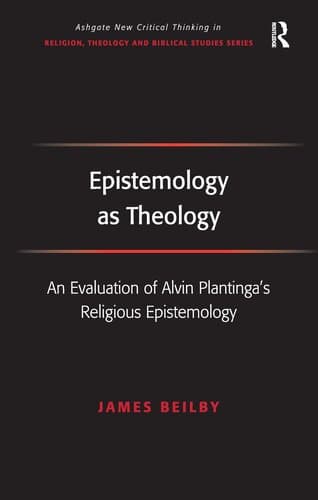
Epistemology as Theology: An Evaluation of Alvin Plantinga's Religious Epistemology
نظرية المعرفة كلاهوت: تقييم نظرية المعرفة الدينية عند ألفين بلانتينجا
Épistémologie comme théologie : Une évaluation de l'épistémologie religieuse d'Alvin Plantinga
Editorial summary
This monograph presents a comprehensive critical assessment of Alvin Plantinga's religious epistemology, examining its philosophical coherence and theological implications. Beilby engages with Plantinga's influential project of reformed epistemology, which attempts to establish the rational legitimacy of theistic belief without reliance on traditional natural theology or evidentialist arguments.
The work traces Plantinga's epistemological development from his early critique of classical foundationalism through his mature theory of warrant and proper function. Beilby analyzes how Plantinga's approach revolutionizes the traditional debate about God's existence by shifting focus from proving theism to defending its epistemic legitimacy. Central to this examination is Plantinga's claim that belief in God can be properly basic—rationally held without inference from other beliefs—if human cognitive faculties include a sensus divinitatis that produces theistic belief in appropriate circumstances.
Beilby carefully evaluates Plantinga's argument that naturalistic epistemology faces an insurmountable evolutionary argument against naturalism, while theistic belief coheres with a proper function account of knowledge. The analysis addresses key objections to Plantinga's position, including the Great Pumpkin objection, religious diversity challenges, and concerns about epistemic circularity. Particular attention is given to how Plantinga's epistemology handles the problem of religious pluralism and whether his framework can adjudicate between competing religious claims.
The monograph situates Plantinga's work within broader philosophical conversations about externalism, reliabilism, and the relationship between epistemology and metaphysics. Beilby examines tensions between Plantinga's Reformed theological commitments and his philosophical methodology, questioning whether his epistemology genuinely remains neutral regarding metaphysical assumptions about human nature and divine action.
While acknowledging Plantinga's significant contribution to philosophy of religion, Beilby identifies limitations in the approach. These include potential problems with the sensus divinitatis concept, questions about the universality of religious experience, and concerns about whether Plantinga's epistemology can provide guidance for religious believers facing doubt. The work concludes by assessing whether Plantinga successfully demonstrates that theistic belief meets the conditions for warrant and whether his religious epistemology ultimately functions as a form of philosophical theology rather than pure epistemology. Through this analysis, Beilby illuminates both the revolutionary nature of Plantinga's project and ongoing debates about the rational status of religious belief in contemporary philosophy.
Argument formulations engaged
Related works
Beilby, James K. (2005). Epistemology as Theology: An Evaluation of Alvin Plantinga's Religious Epistemology. Ashgate.
@book{epistemology-as-theology-an-evaluation-o,
  author    = {Beilby, James K.},
  title     = {Epistemology as Theology: An Evaluation of Alvin Plantinga's Religious Epistemology},
  year      = {2005},
  publisher = {Ashgate},
  url       = {https://god-database.com/en/works/epistemology-as-theology-an-evaluation-of-alvin-plantingas-religious-epistemology-2005}
}