
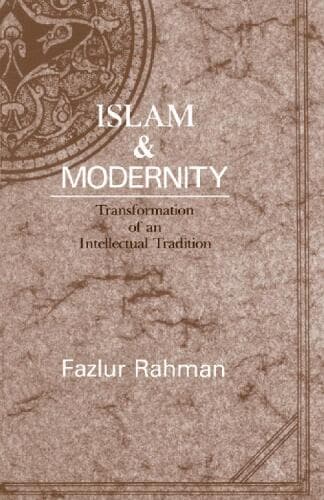
Islam and Modernity: Transformation of an Intellectual Tradition
الإسلام والحداثة: تحويل تقليد فكري
Islam et modernité : Transformation d'une tradition intellectuelle
Editorial summary
Rahman's groundbreaking monograph examines the complex relationship between Islamic intellectual tradition and the challenges posed by modernity, offering a reformist vision that seeks to revitalize Islamic thought while maintaining its essential theological foundations. The work represents a significant intervention in debates about religious authority, scriptural interpretation, and the possibility of Islamic modernization without secularization.
Central to Rahman's argument is his critique of both traditionalist ossification and modernist capitulation within contemporary Islamic thought. He traces the historical development of Islamic intellectual traditions from the classical period through medieval scholasticism to colonial encounters with Western modernity. Rahman identifies a critical rupture between the dynamic, contextual hermeneutics of early Islamic jurisprudence and the rigid literalism that emerged in later centuries. This historical analysis grounds his call for a return to the Quranic worldview through what he terms a "double movement" methodology: first understanding the Quran in its original context, then applying its fundamental principles to contemporary circumstances.
Rahman engages critically with both Muslim traditionalists who resist any reinterpretation of classical formulations and secular modernizers who advocate wholesale adoption of Western models. Against the former, he argues that intellectual stagnation betrays the creative spirit of early Islamic scholarship. Against the latter, he maintains that authentic reform must emerge from within Islamic sources rather than through external imposition. His position challenges Orientalist assumptions about Islamic incompatibility with rational inquiry while simultaneously rejecting apologetic defenses of medieval interpretations.
The work's theological significance lies in Rahman's insistence that divine revelation requires human interpretation responsive to changing historical conditions. He argues that God's guidance through the Quran demands active intellectual engagement rather than passive reception. This hermeneutical approach preserves divine authority while acknowledging human agency in understanding and applying revelation. Rahman's methodology influenced subsequent Islamic reformist movements and contributed to broader discussions about religion's role in modern society.
Rahman's analysis demonstrates how religious traditions can undergo substantive transformation without abandoning core theological commitments. His work provides a model for internal religious critique that neither dismisses tradition nor uncritically embraces modernity. By articulating a vision of Islamic intellectual renewal grounded in rigorous historical scholarship and theological reflection, Rahman offers important insights for understanding how monotheistic traditions navigate the challenges of contemporary pluralistic societies while maintaining their claims to divine truth.
Argument formulations engaged
Related works
Rahman, F. (1982). Islam and Modernity: Transformation of an Intellectual Tradition.
@book{islam-and-modernity-transformation-of-an,
  author    = {Rahman, F.},
  title     = {Islam and Modernity: Transformation of an Intellectual Tradition},
  year      = {1982},
  url       = {https://god-database.com/en/works/islam-and-modernity-transformation-of-an-intellectual-tradition-1982}
}