
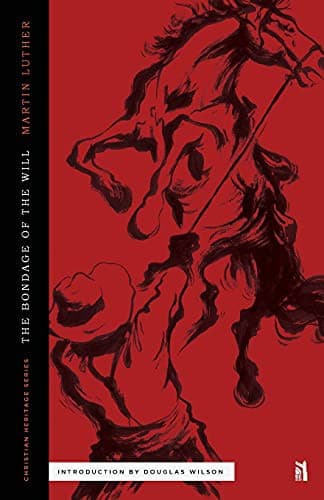
The Bondage of the Will
عبودية الإرادة
L'Asservissement de la volonté
Editorial summary
Luther's "The Bondage of the Will" constitutes a watershed theological treatise that fundamentally reshapes Christian discourse about divine sovereignty and human agency. Written as a polemical response to Erasmus of Rotterdam's "On Free Will" (1524), Luther's work articulates a radical doctrine of predestination that grounds salvation entirely in God's unconditional election rather than human merit or choice. The text represents Luther's most systematic theological statement and his only work he later deemed worthy of preservation alongside his catechisms.
Luther employs a method of biblical exegesis combined with logical argumentation to demonstrate that post-Fall humanity possesses no capacity to choose God or contribute to salvation. Drawing extensively on Augustine while surpassing him in severity, Luther argues that human will remains enslaved to sin until God sovereignly liberates it through grace. The work systematically examines key scriptural passages that Erasmus had marshaled for free will, reinterpreting each to support divine determinism. Luther's hermeneutical approach privileges Paul's epistles, particularly Romans 9, as the interpretive key for understanding human nature and divine action.
The treatise's intellectual context encompasses the broader Reformation debate about justification by faith alone. Luther positions his argument against not only Erasmus's Christian humanism but also scholastic theology's synthesis of Aristotelian philosophy with Christian doctrine. By rejecting any notion of human cooperation with grace, Luther dismantles medieval soteriology's careful balance between divine initiative and human response. His stark either-or rhetoric—God does everything or nothing in salvation—deliberately polarizes the debate to prevent theological compromise.
Luther's contribution to the God debate proves transformative in establishing divine sovereignty as the central organizing principle of Protestant theology. The work reconceptualizes God as absolutely sovereign over all events, including human damnation, while maintaining divine justice through appeal to God's hidden will. This theological determinism profoundly influences subsequent Reformed theology through Calvin and others, while simultaneously provoking centuries of debate about theodicy and human responsibility. The text's uncompromising assertion that God actively hardens hearts and predestines some to damnation challenges philosophical theology to reconcile divine goodness with absolute sovereignty. Luther's work thus remains indispensable for understanding Protestant conceptions of God's relationship to human freedom and the theological foundations of Reformation thought.
Argument formulations engaged
Related works
Luther, Martin (1525). The Bondage of the Will. e-artnow.
@book{the-bondage-of-the-will-1525,
  author    = {Luther, Martin},
  title     = {The Bondage of the Will},
  year      = {1525},
  publisher = {e-artnow},
  url       = {https://god-database.com/en/works/the-bondage-of-the-will-1525}
}