
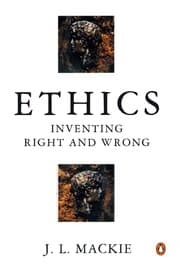
Ethics: Inventing Right and Wrong
الأخلاق: اختراع الصواب والخطأ
Éthique : Inventer le bien et le mal
Editorial summary
This influential work presents a systematic case for moral skepticism, arguing that objective moral values do not exist in the fabric of reality. Mackie develops his argument through two primary philosophical moves: the argument from relativity and the argument from queerness. The former observes that moral codes vary dramatically across cultures and historical periods in ways that resist reduction to a single objective standard. The latter contends that objective moral properties, if they existed, would be metaphysically peculiar entities unlike anything else in the universe, possessing an intrinsic "to-be-doneness" that somehow compels action.
Mackie's analysis directly challenges moral realism and, by extension, traditional theistic ethics that ground morality in divine commands or God's nature. He argues that humans project their subjective attitudes onto reality, mistakenly believing they perceive objective moral facts. This error theory explains why moral discourse appears to refer to objective truths when in fact it expresses nothing more than human inventions. The work engages critically with intuitionist philosophers like H.A. Prichard and W.D. Ross, as well as responding to Kantian and utilitarian attempts to establish objective moral foundations.
The monograph's significance for debates about God lies in its systematic undermining of moral arguments for theism. If there are no objective moral values, then arguments from moral experience to God's existence fail. Mackie explicitly addresses the relationship between morality and religion, arguing that the widespread belief in objective ethics often stems from religious traditions that mistakenly absolutize human conventions. His naturalistic approach suggests that morality evolved as a useful fiction enabling social cooperation, requiring no divine lawgiver.
Mackie's error theory has provoked extensive responses from both theistic and secular moral realists. Critics argue that his skepticism proves too much, potentially undermining rational and epistemic norms alongside moral ones. Others contend that the argument from queerness applies equally to other seemingly objective features of reality that Mackie accepts. Despite these objections, the work remains a touchstone for metaethical debate and continues to challenge those who would ground morality in divine authority. Its rigorous analytical approach exemplifies the application of logical positivism's verification principles to moral discourse, demonstrating how mid-twentieth century analytic philosophy approached questions traditionally answered by theology.
Argument formulations engaged
Related works
Mackie, J. L. (1977). Ethics: Inventing Right and Wrong. Penguin.
@book{ethics-inventing-right-and-wrong-1977,
  author    = {Mackie, J. L.},
  title     = {Ethics: Inventing Right and Wrong},
  year      = {1977},
  publisher = {Penguin},
  url       = {https://god-database.com/en/works/ethics-inventing-right-and-wrong-1977}
}