
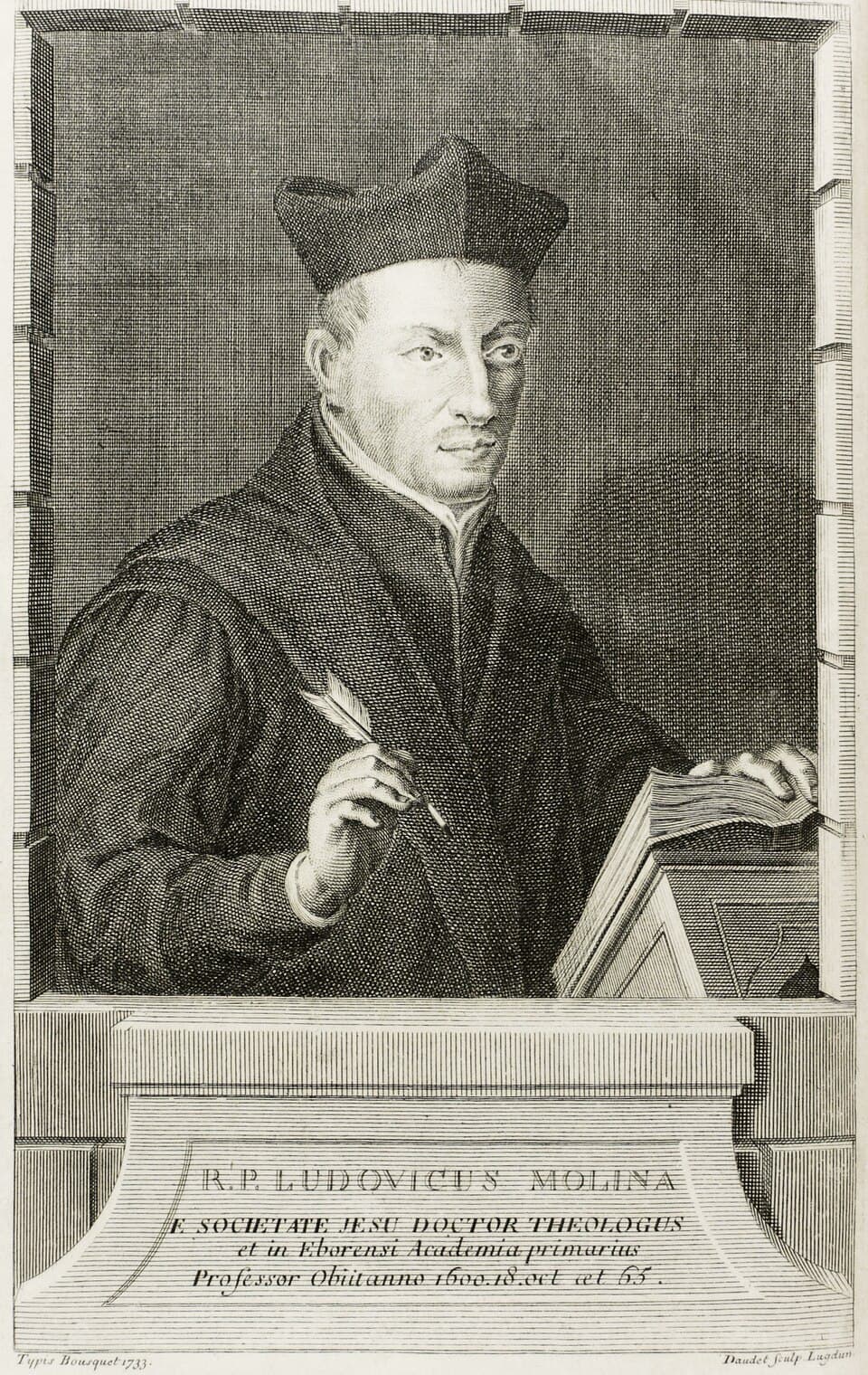
On Divine Foreknowledge: Part IV of the Concordia (translation of Luis de Molina)
في المعرفة الإلهية المسبقة: الجزء الرابع من الكونكورديا (ترجمة لويس دي مولينا)
Sur la prescience divine : Partie IV de la Concordia (traduction de Luis de Molina)
Editorial summary
Luis de Molina's treatise on divine foreknowledge, presented here in Alfred Freddoso's 1988 English translation, stands as one of the most significant contributions to debates about God's omniscience and human freedom in the history of Christian philosophy. Written in the late sixteenth century as Part IV of his larger work Concordia, Molina's text addresses a perennial theological problem: how can God possess infallible knowledge of future contingent events, particularly free human actions, without thereby necessitating those events and eliminating genuine human freedom?
Molina develops his revolutionary solution through the concept of "middle knowledge" (scientia media), positioning it between God's natural knowledge of necessary truths and God's free knowledge of what will actually occur. Through middle knowledge, God knows what any free creature would do in any possible circumstance, prior to his creative decree. This allows God to actualize a world knowing precisely how free agents will act, while preserving their genuine freedom since these agents could have acted otherwise in those same circumstances.
The work engages critically with both Thomistic and Protestant Reformed positions on predestination and providence. Against the Thomists, particularly Domingo Báñez, Molina rejects the notion that God's causal determination of human actions is compatible with freedom. Against Reformed theologians who embrace theological determinism, he insists that genuine creaturely freedom requires the ability to do otherwise under identical circumstances. Molina argues that both positions ultimately make God the author of sin and undermine moral responsibility.
Molina's method combines rigorous scholastic argumentation with careful scriptural exegesis and attention to church tradition. He systematically examines biblical passages concerning divine foreknowledge, prophecy, and predestination, demonstrating how his middle knowledge theory better accounts for scriptural data than competing views. His philosophical analysis draws heavily on Aristotelian categories while innovating significantly beyond his sources.
The significance of this work extends far beyond its original context. Molina's middle knowledge solution inaugurated centuries of debate that continue in contemporary philosophy of religion. His theory provides resources for reconciling divine sovereignty with libertarian freedom, addressing problems of petitionary prayer, and understanding divine providence. Modern philosophers and theologians across denominational lines continue to develop, critique, and refine Molinist insights, making this text essential reading for understanding ongoing debates about God's knowledge and human freedom.
Argument formulations engaged
Related works
Freddoso, Alfred J. (1988). On Divine Foreknowledge: Part IV of the Concordia (translation of Luis de Molina). Cornell University Press.
@book{on-divine-foreknowledge-part-iv-of-the-c,
  author    = {Freddoso, Alfred J.},
  title     = {On Divine Foreknowledge: Part IV of the Concordia (translation of Luis de Molina)},
  year      = {1988},
  publisher = {Cornell University Press},
  url       = {https://god-database.com/en/works/on-divine-foreknowledge-part-iv-of-the-concordia-translation-of-luis-de-molina-1988}
}