
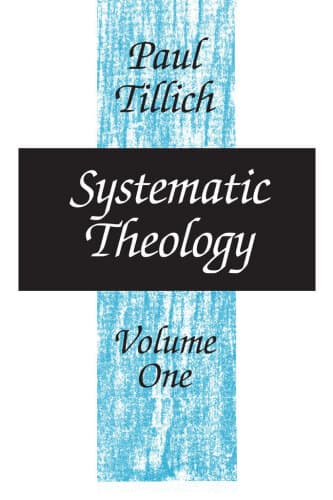
Systematic Theology, Volume 1: Reason and Revelation, Being and God
اللاهوت النظامي، المجلد 1: العقل والوحي، الوجود والله
Théologie systématique, Volume 1 : Raison et Révélation, Être et Dieu
Editorial summary
Paul Tillich's "Systematic Theology, Volume 1: Reason and Revelation, Being and God" presents a revolutionary reconstruction of Christian theology through existentialist philosophy and ontological analysis. This foundational volume establishes Tillich's method of correlation, which seeks to demonstrate the mutual interdependence between existential questions arising from human experience and theological answers found in Christian revelation. The work represents a decisive break from both traditional natural theology and neo-orthodox approaches, offering instead a theology that engages seriously with modern philosophical concerns while maintaining religious substance.
Tillich begins by examining the relationship between reason and revelation, arguing that revelation does not destroy reason but fulfills it by addressing questions that reason itself raises but cannot answer. He critiques both rationalist approaches that reduce revelation to natural knowledge and supernaturalist positions that treat revelation as alien to human reason. His analysis establishes theology as the methodological articulation of ultimate concern, positioning religious language as necessarily symbolic rather than literal.
The work's most influential contribution lies in its treatment of God as Being-itself or the Ground of Being, rather than as a being among beings. Tillich argues that traditional theistic conceptions, which treat God as a supreme entity existing alongside other entities, inevitably lead to atheistic reactions. Instead, he proposes understanding God as the power of being that overcomes non-being, the ultimate reality that grounds all particular existence. This ontological approach challenges both classical theism and atheism by transcending their shared assumption that God must be conceived as a particular existent.
Tillich engages critically with various philosophical traditions, particularly German idealism and existentialism, while addressing the challenges posed by logical positivism and scientific materialism. His work responds to the modern crisis of meaning by showing how theological symbols address fundamental human anxieties about finitude, guilt, and meaninglessness. The volume establishes a theological framework that takes seriously both the legitimate concerns of secular criticism and the enduring significance of religious symbols.
This systematic reconstruction proves significant for contemporary debates by offering a third way beyond traditional theism and atheism. Tillich's influence extends beyond theology into philosophy of religion, depth psychology, and cultural criticism, providing resources for understanding religious language and experience in non-literalist terms while maintaining their existential significance and truth-bearing capacity.
Argument formulations engaged
Related works
Tillich, Paul (1951). Systematic Theology, Volume 1: Reason and Revelation, Being and God. University of Chicago Press.
@book{systematic-theology-volume-1-reason-and-,
  author    = {Tillich, Paul},
  title     = {Systematic Theology, Volume 1: Reason and Revelation, Being and God},
  year      = {1951},
  publisher = {University of Chicago Press},
  url       = {https://god-database.com/en/works/systematic-theology-volume-1-reason-and-revelation-being-and-god-1951}
}